No Estem Sol*s
Barcelona

24.12.2020
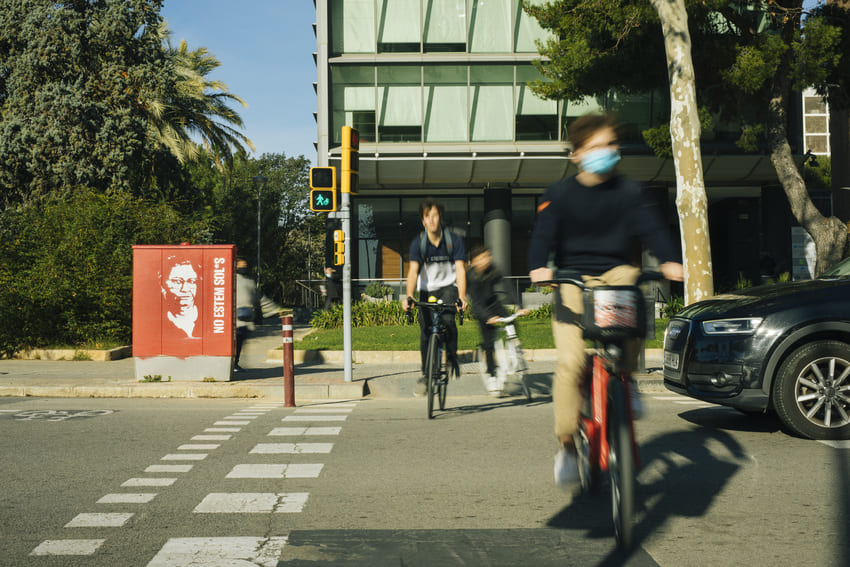
The Les Corts district of the city of Barcelona has promoted No Estem Sol*s, a social project that links artistic intervention in public space with the community of older people in the Les Corts district of Barcelona. During November and December, the cultural organisation Rebobinart produced this initiative, designed by artist Octavi Serra. Using art as a tool for social transformation, the project strengthens the ties between citizens and the elderly of the district, offering them new channels of social support and asserting the presence of older people in public space.
During the COVID-19 pandemic, older people have proven to be one of the most vulnerable groups in the population, not only because of the health impact of the virus but also because of the effects of isolation and loneliness during lockdown. In response to this context, No Estem Sol*s is conceived as an artistic initiative that pays tribute to this group while proposing new forms of companionship for the elderly.
How the project unfolded
The project was developed in three distinct phases. First, the participants were selected, based on a proposal put forward by the Les Corts District.
After getting in touch with the participants, the first phase of the process begins: getting to know the people who will be the project’s protagonists. Journalist Carlos Márquez interviewed the participants by phone, in line with COVID-19 prevention protocols. During these calls, the older residents spoke mainly about their relationship with the Les Corts neighbourhood, sharing anecdotes and memories as well as details of their professions and involvement with local organisations.
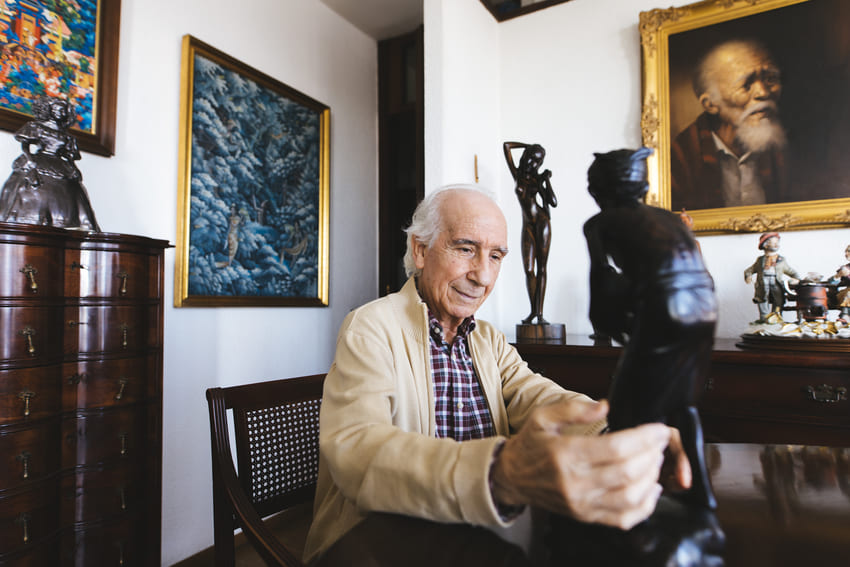
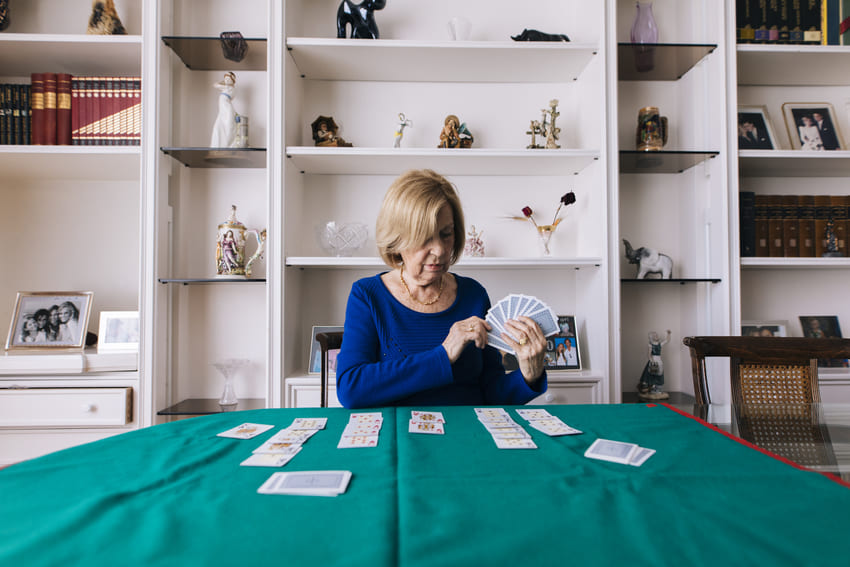
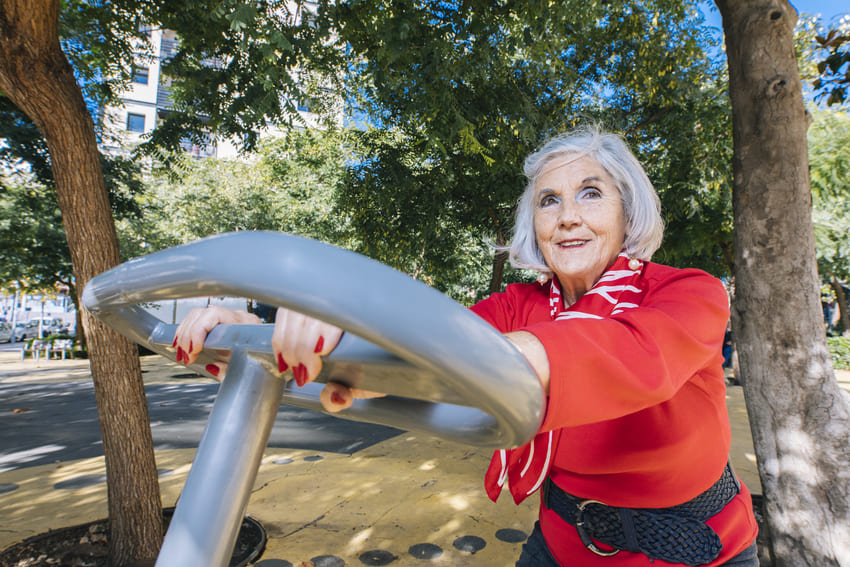
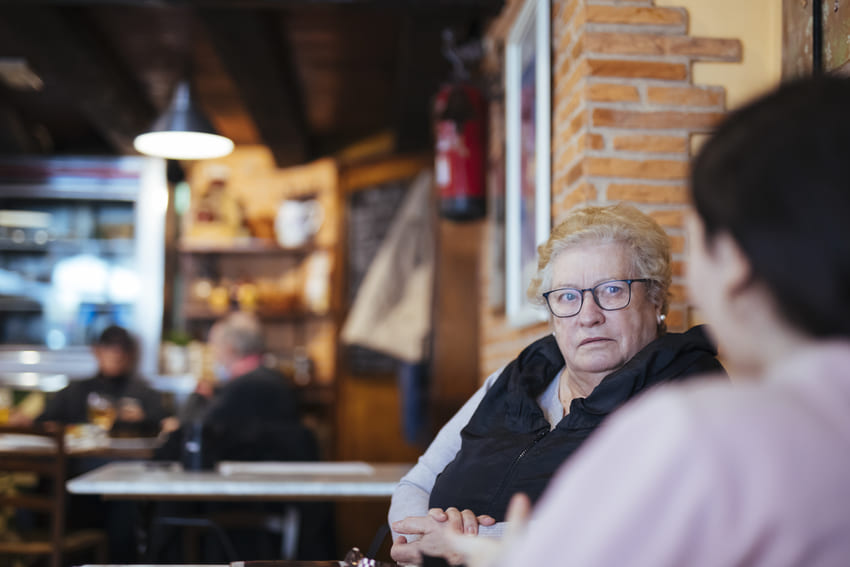
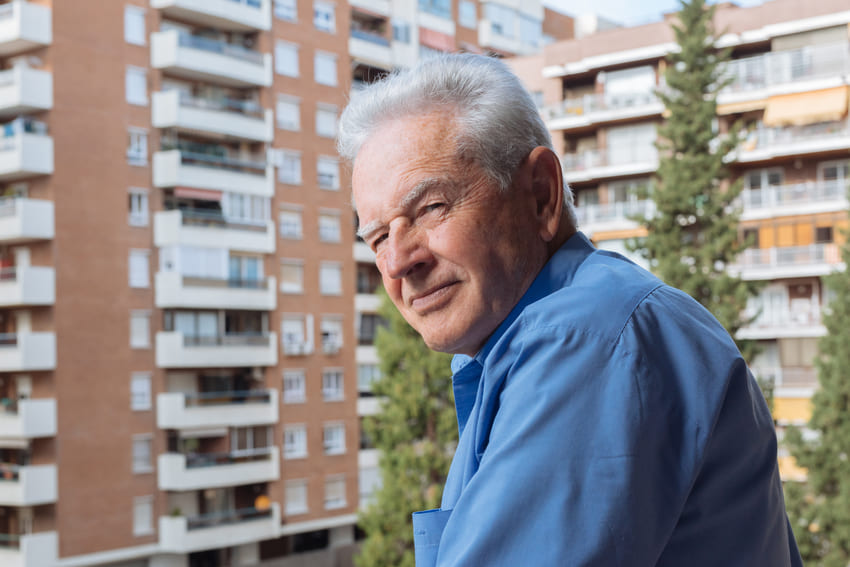
Photographer Laura Abad carried out the second stage of the project, photographing the 7 people involved both in public and private settings. The result is a selection of portraits and images of the participants doing sport or showing their hobbies; some photographs were even taken at organisations the protagonists are still linked to.
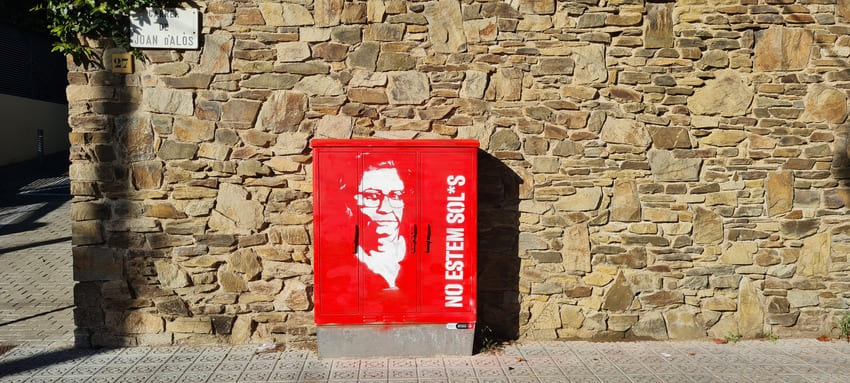
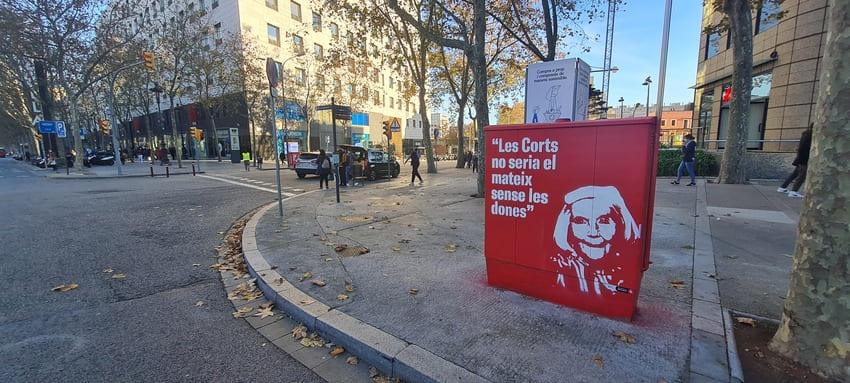
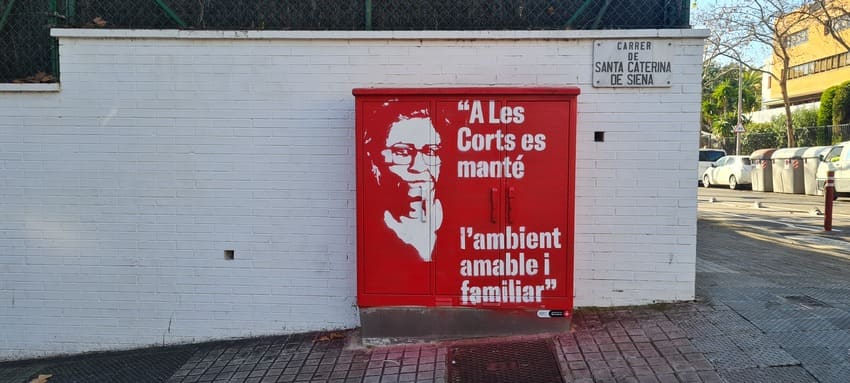
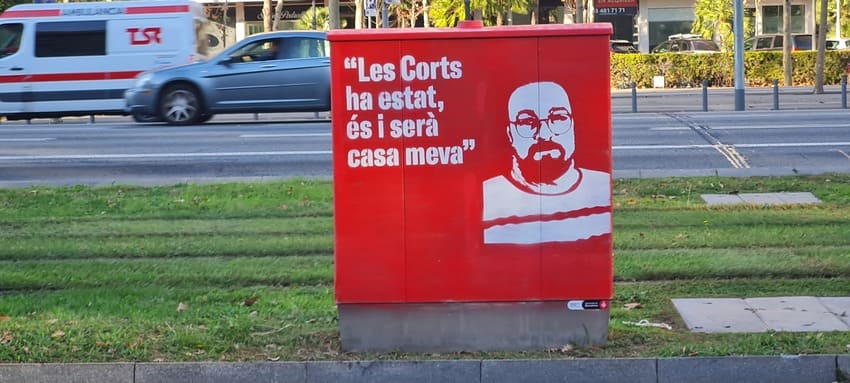
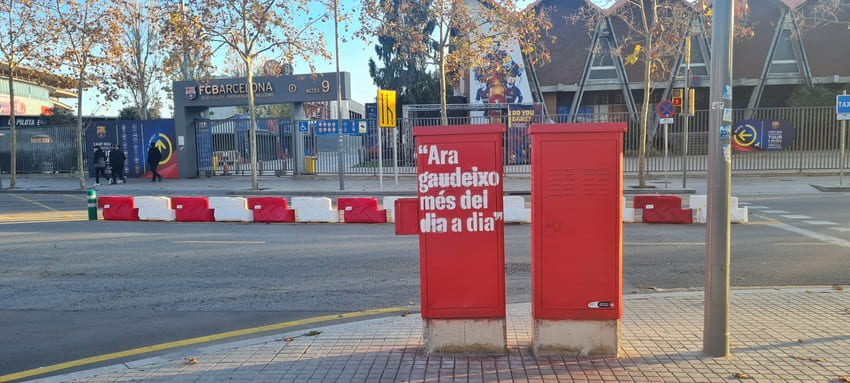
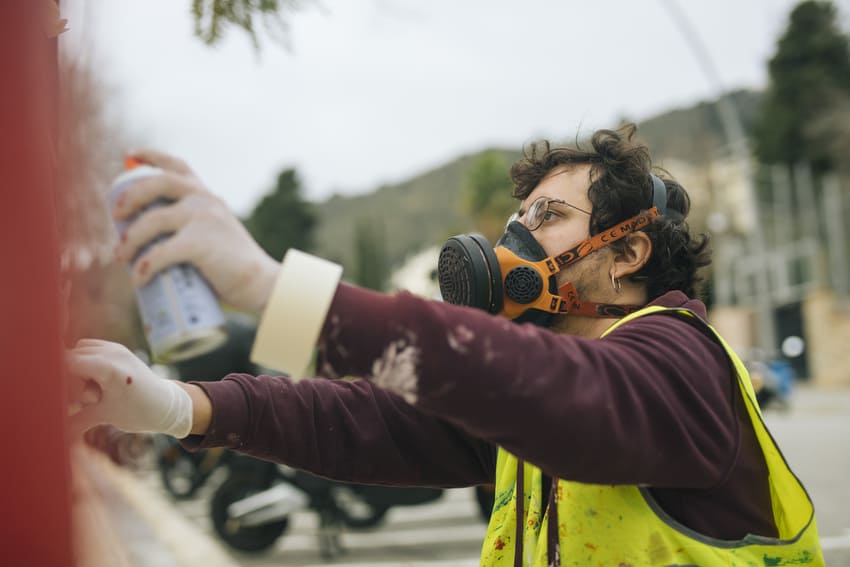
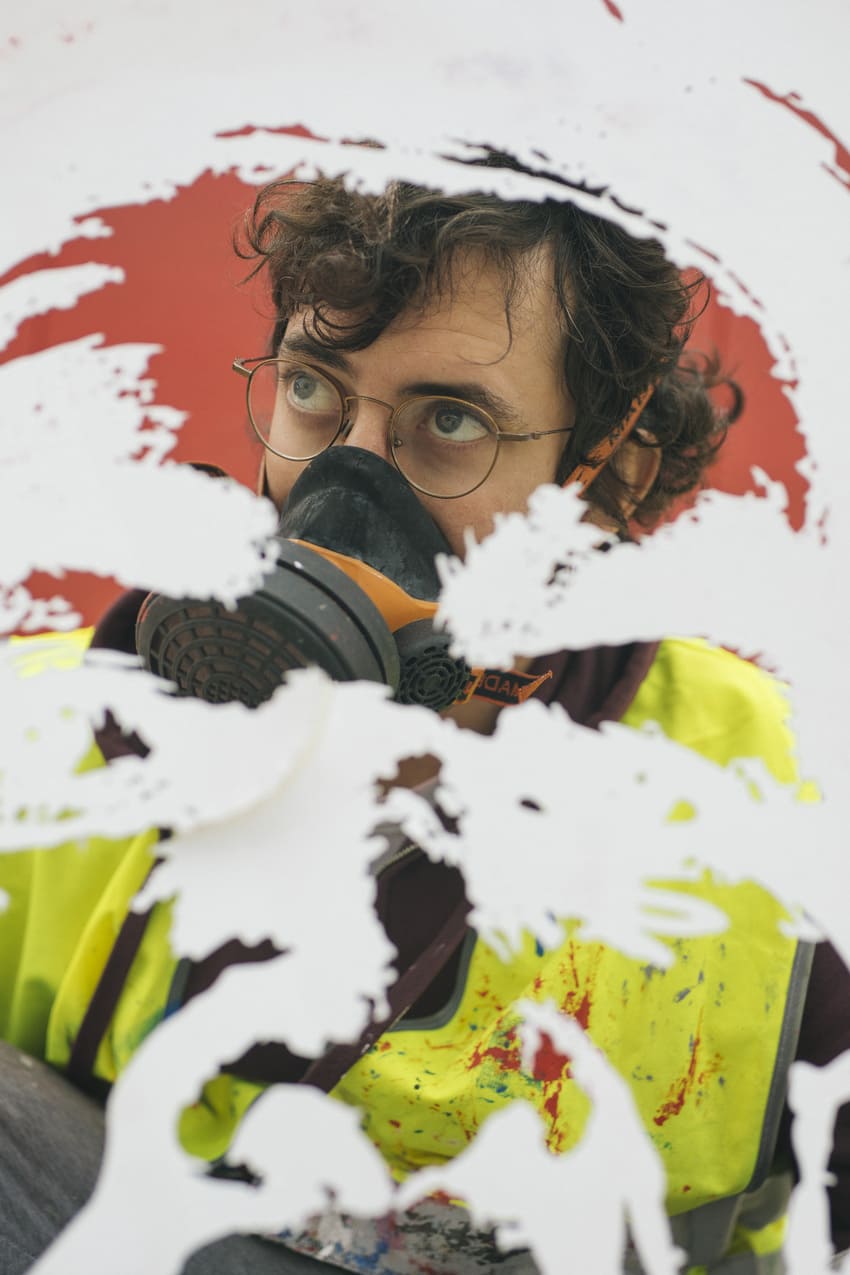
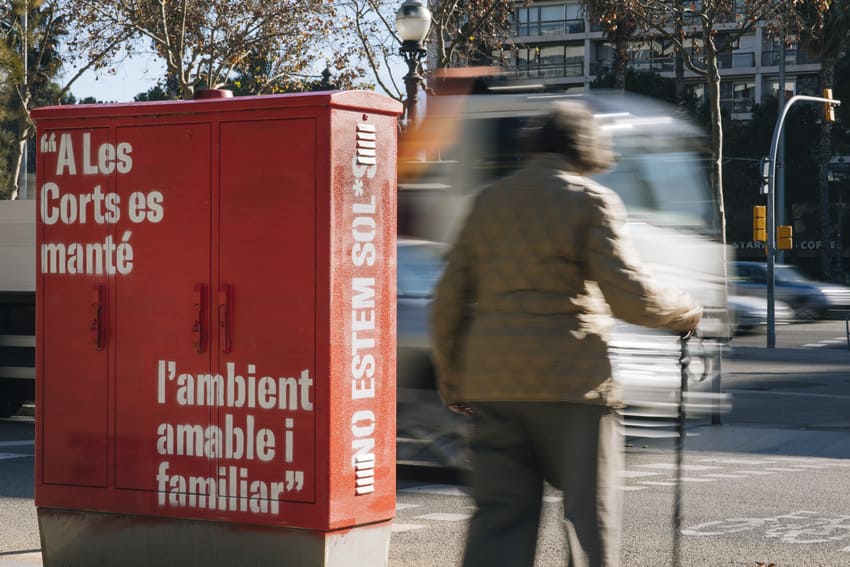
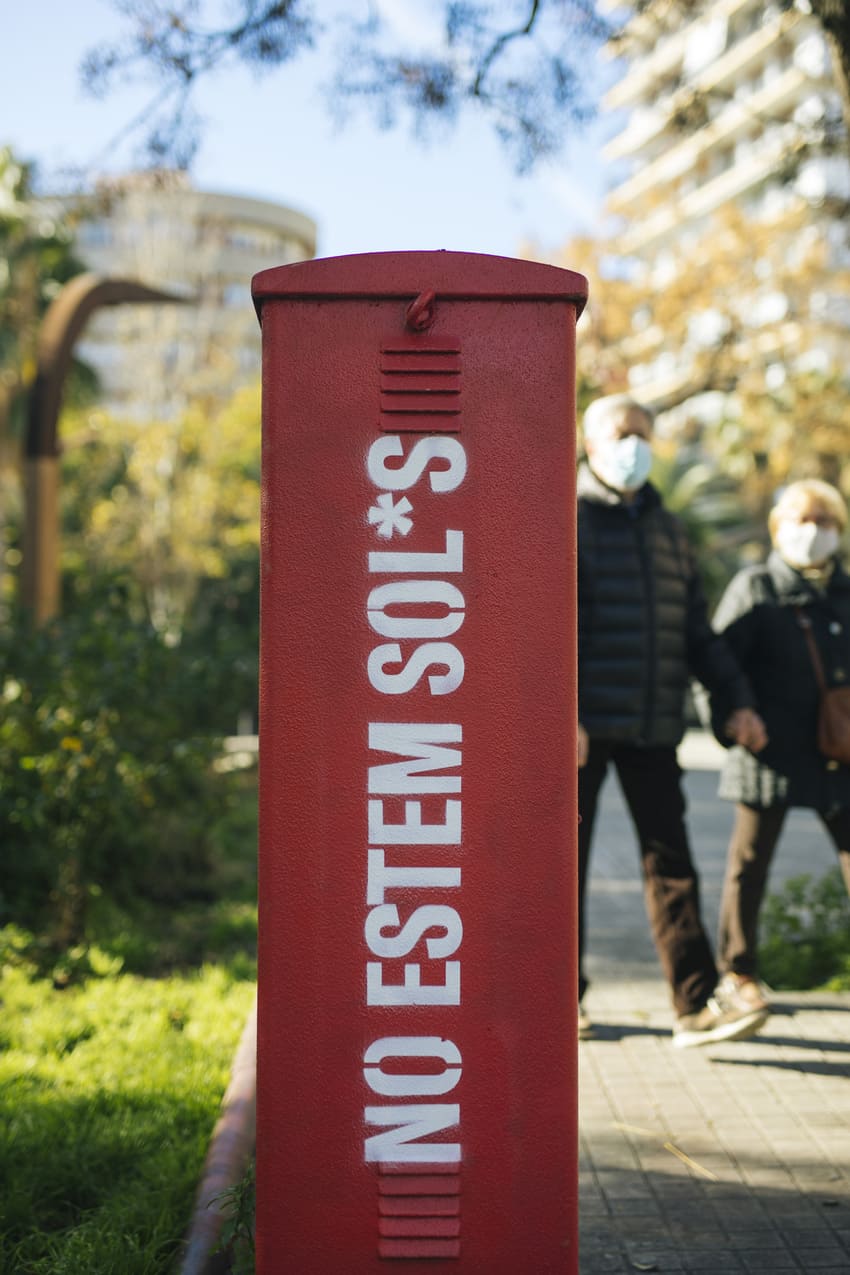
The final phase of the project was led by artist Octavi Serra, who used the photographs and interviews to create the interventions applied to the electrical cabinets attached to street lighting in the Les Corts neighbourhood. A total of 46 interventions were carried out using stencils showing the project’s name, portraits of participants and quotes taken from the interviews, all in white on a red background.
The making of No Estem Sol*s was documented in a video by filmmaker Marta Romero, which also features statements from all the professionals involved in the project. Rebobinart proposed three different routes to visit the interventions around the neighbourhood, available on the interactive map.
Project team
Octavi Serra - The work of this artist, designer and photographer focuses on capturing the ironies, clichés and frustrations of modern life. Serra builds conceptual installations that respond to contemporary culture and question the status quo.
Laura Abad - Photographer with a degree in Humanities from UPF. Interested in documentary, portraiture, dance and participatory photography. She has photographed projects such as Amics de la Gent Gran and the ÚS Festival.
Carlos Márquez - Reporter and columnist for El Periódico de Catalunya for the past 20 years. Regular contributor to the Bàsics programme on Betevé and Planta Baixa on TV3.
Rebobinart promotes a professional vision of urban art, putting it at the service of society by creating projects rooted in their territory that add value to urban space and open up new channels of communication with citizens, encouraging critical thinking and conveying messages of social relevance.
The protagonists
Seven residents of Les Corts lent their voice and their portrait to the project. These are their full stories.


José Antonio Ortega
“Les Corts has streets full of life”
The pandemic has robbed José Antonio of two important celebrations. In these difficult months he has turned 80 and, with his wife Maria, celebrated their golden wedding anniversary. 50 years together, with Les Corts as the backdrop to their bond. Lockdown, however, caught them in Galicia, in a small village where they have a family home.
José Antonio’s story begins in Castellar de la Frontera, a small walled town in the province of Cádiz, where his father held a civil-service post and his mother ran a small shop. “We were seven siblings and had a very happy childhood, with the older ones looking after the younger while our parents were at work.” At 18 he began working for a shipbuilding company in Cádiz, and from the Andalusian coast he moved on to Sestao.
To Barcelona
At 28 he came to Barcelona and took part in building the Besòs chimneys. He married Maria on 22 November 1970 and they moved into their flat in Les Corts, on Carrer Evarist Arnús, not far from Barça’s stadium. He started working at Seat, where he continued in power-plant maintenance for 35 years.
Veterans de Catalunya
José Antonio was part of founding Veterans de Catalunya, a group of friends who played amateur football and, in the late 1970s, turned it into a football school for children without resources. “This has never been about making money, but about integration through sport,” sums up José Antonio, known to everyone as Pepe. On its 50th anniversary, Veterans de Catalunya received Barcelona’s Medal of Honour.
José Antonio is “delighted” with Les Corts. “Our neighbourhoods are very well organised and I see a lot of solidarity.” Once the interview is over, he picks up his paintbrush again — a hobby that blossomed after retirement.
Interview: Carlos Márquez · Photography: Laura Abad


Pedro Alonso
“There are plenty of people around us who need our help”
Today is one of those days when Pedro and Maribel take the car for the weekly big shop. “I’ve got an hour to talk, our day is very organised,” he says. This is a methodical man, a numbers man. It all begins in 1941 in the small town of Cogeces del Monte, not far from Valladolid. He trained as a commercial accountant, and in 1964 arrived in Barcelona to keep the books for a clothing manufacturer.
One day, a friend told him he had seen the Rodríguez sisters at the beach. One of them, Maribel, had been courted by Pedro years before. This time they started a relationship and married in 1969. From those years, Pedro fondly remembers Paco Lucio, the man who was at the association’s small office every day welcoming people. “What we’re doing with this project reminds me of the spirit behind Banc Solidari’s early days — this idea of ‘no estem sols’ [we are not alone], reminding older people that they remain a fundamental part of society.”
At 79, Pedro remains the association’s vice-president. In 2016 he was named Cortsenc d’Honor. The pandemic was another trial by fire: Pedro and Maribel were hospitalised days apart, and “it was very moving to be reunited”. Today they live as normal a life as covid allows. “We’re lucky to live in the best place in Barcelona.”
Interview: Carlos Márquez · Photography: Laura Abad


Otilia Espanyol
“We need to pay more attention to our elders”
Her parents were afraid. They didn’t want their daughter persecuted over her name, so they chose one that wasn’t especially Catholic: Otilia. The youngest daughter was born in 1936, and this story brings us to Les Corts, where Otilia has lived for more than half a century.
Faced with an 84-year-old, logic suggests everything should be caution and a slow pace. Otilia rejects the image of fragility. “I don’t know how many more years I have left, but if my children have to ruin themselves so I live longer, I’d rather die. I don’t want to feel like a burden to everyone.” What Otilia won’t forgive is a lack of respect. “Nowadays the youngest child is king of the house, but I think children should pay a bit more attention to their parents and grandparents.”
Fate struck Otilia hard in 1983: they had a car accident and her husband, Francesc, died. They had married in 1961 in Torroella de Montgrí. She has been an FC Barcelona member for 50 years. She has never considered leaving her home. “I live my life in Les Corts, I love it here and have everything close by. I wouldn’t trade this for anything. You could offer me a flat anywhere and I still wouldn’t go.”
Interview: Carlos Márquez · Photography: Laura Abad


Andrés Quílez
“Sant Ramon has always been like a family”
Andrés Quílez gets emotional during the conversation. He looks back on a life marked by struggle: first to support his family, later to make Sant Ramon a better neighbourhood. Andrés’s childhood would be unthinkable today: he was able to study from age 7 to 9, but before turning 10 he had to start working “to bring food home”.
He spent four years making televisions at the Vanguard factory, where he met Rosa, with whom he has shared his life for more than 50 years. He joined the company that is now Endesa and stayed there for 35 years. Andrés and Rosa had their only son, Xavier, who as a small child suffered a serious illness. “Those were very difficult times, but today Xavier barely remembers it and leads a completely normal life.”
He was first president of his residents’ community for 13 years, and since February 2020 has been president of the Sant Ramon Residents’ Association. “Many older people don’t have internet or WhatsApp, and they have the same right as anyone to know what’s happening in the neighbourhood.” The pandemic has been especially hard on him, as he has a three-year-old granddaughter he has barely been able to enjoy.
Interview: Carlos Márquez · Photography: Laura Abad


Maria Victoria García Gaitero
“Les Corts is still a bit like a village”
It’s hard to get bored listening to Maria Victoria. There’s barely any need to ask questions, because she links one topic to the next all by herself. Her story takes us back to the early 1940s, to the small village of Barbadillo de Herreros, in Burgos. She studied teaching in Tarragona and married Ernest Weikert, of German origin, at the high altar of Poblet.
Before settling in Les Corts, the couple lived in Ciutat Meridiana, until their family lent them money to afford a flat in Les Corts. At 35, after leaving work to raise her five children, she decided to return to teaching, a profession she practised for three decades until retiring from the Seat School in Zona Franca.
Her legacy can’t be understood without her personal fight for women’s empowerment: she founded the Grup de Dones Elisenda de Montcada. This work was recognised in 2007 with Barcelona’s Medal of Honour. She has spent the pandemic alone at home, since Ernest died two years ago, but her optimism has proved stronger than sadness. “Les Corts wouldn’t be the same without the women who built it up.”
Interview: Carlos Márquez · Photography: Laura Abad


Carme Turigas i Miguel Angel Marina
“Les Corts keeps a very family-like atmosphere”
Carme Turigas’s life revolves around Avinguda de Sant Ramon Nonat. Born in 1947, she worked for more than half a century at Bodega Aregall, one of the district’s most iconic bars. She started there at 20, when she married the owner’s son, and only recently retired, passing the baton to her son Esteve and his wife Zarina.
She was vice-president of the Maternitat–Sant Ramon Neighbourhood Council for many years and turned the bodega into her office. “People knew I like to listen, and they’d come to share their problems so I could later take them to whichever politicians were in charge.” For the past five years she has lived with Miguel Ángel Marina, whom she met at a neighbourhood festival in Sant Ramon.
Carme can’t help feeling a certain nostalgia for the past, but nobody had better touch her Les Corts: “This has been, is, and always will be my home, and it’s still the best part of Barcelona.”
Interview: Carlos Márquez · Photography: Laura Abad
The set of artistic interventions in public space aims to form a cross-cutting social and artistic project, through which citizens can become aware of the importance of this group for the life, identity and history of the neighbourhood. Likewise, the networked effort behind the project seeks to highlight the importance of local organisations and associations and their connection with the elderly.