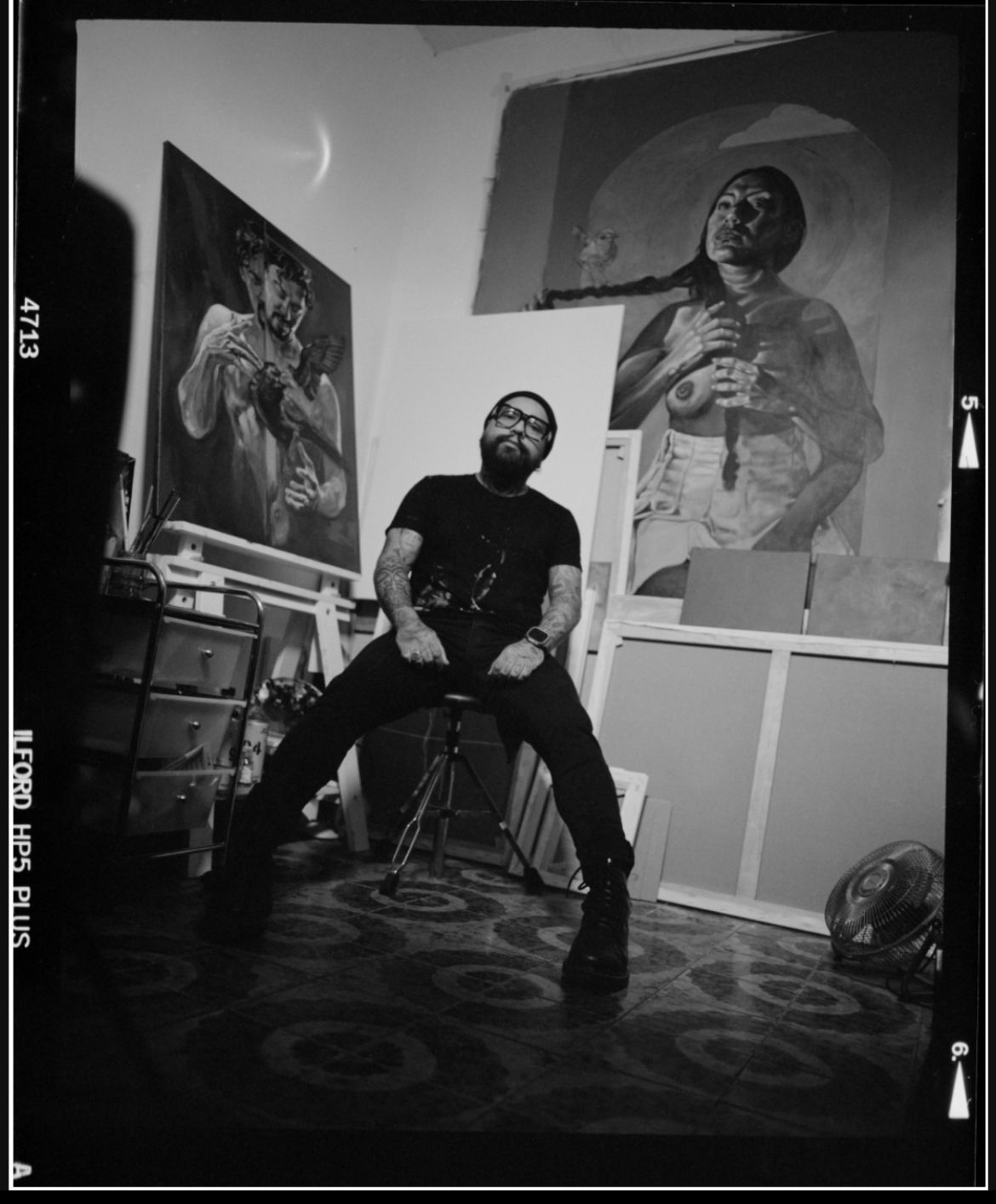
 Felipe Pincel (Chile, 1982) is a multidisciplinary artist based in Barcelona whose work rests on painting, though he reached it by a long road: academic training in painting, then graphic design and illustration, and fifteen years as a professional tattoo artist before turning to muralism. He was born under the dictatorship and grew up looking at the political murals on Chile’s streets; that is where the Indigenous gaze and social commitment of his work come from — large-format portraits that claim a place for the identities advertising and cinema kept out of the frame for decades.
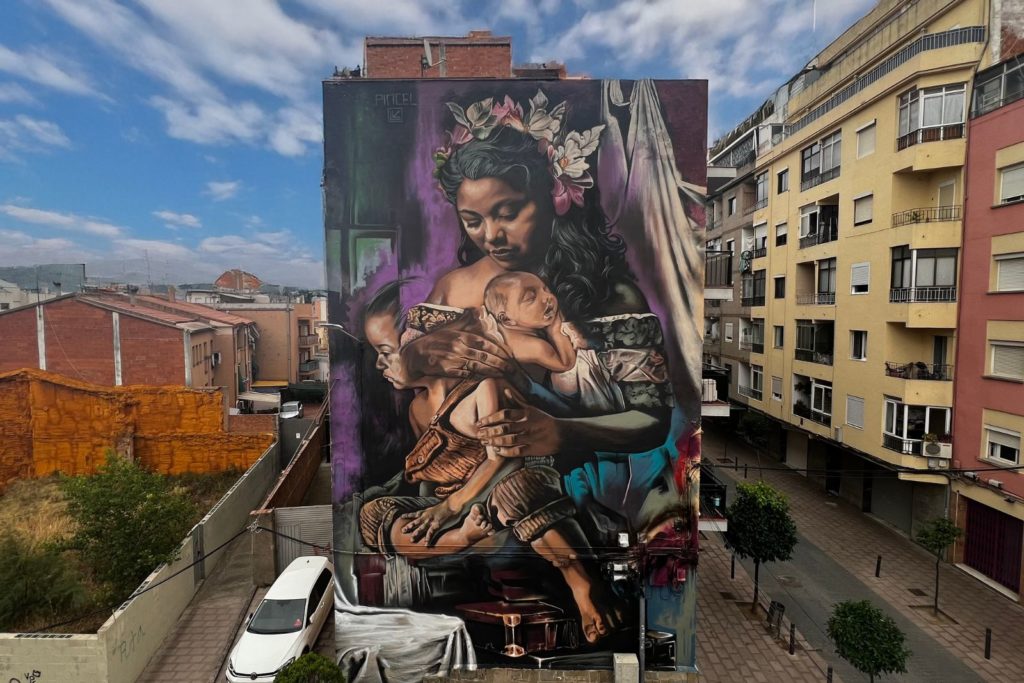
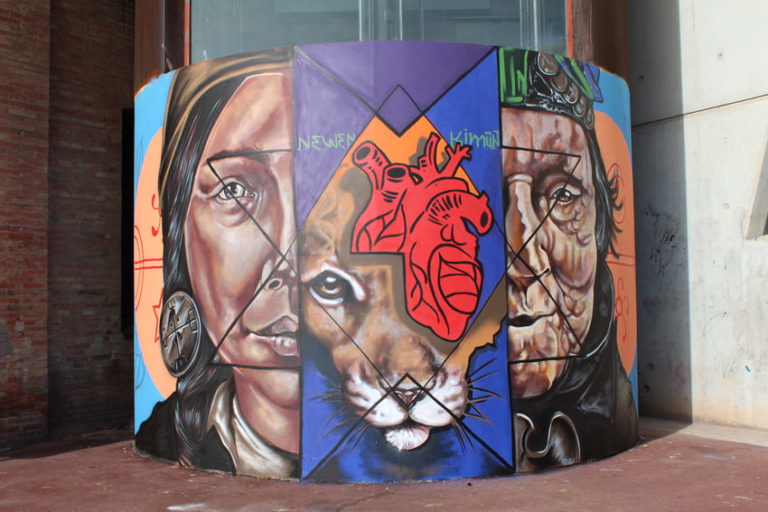
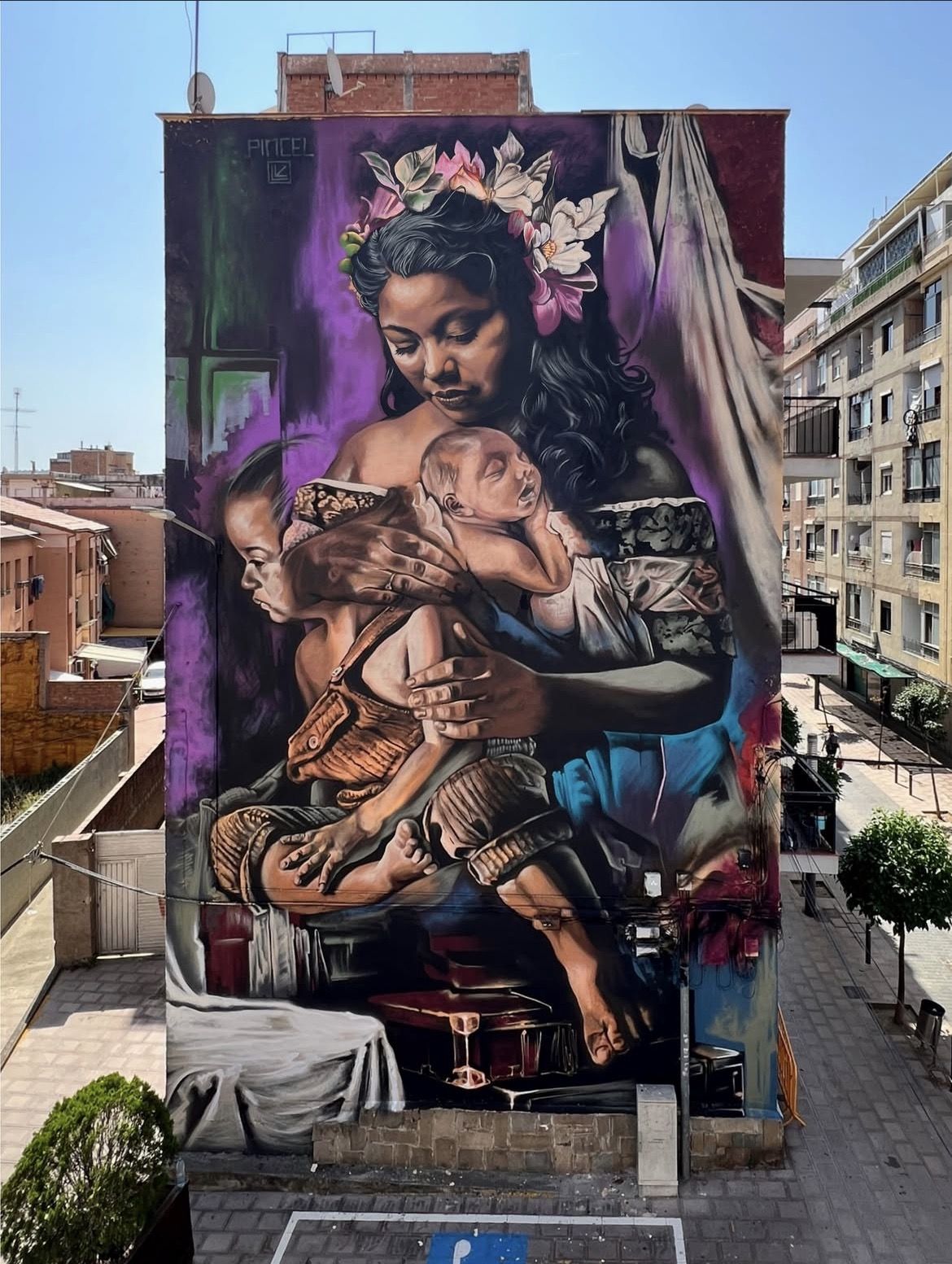
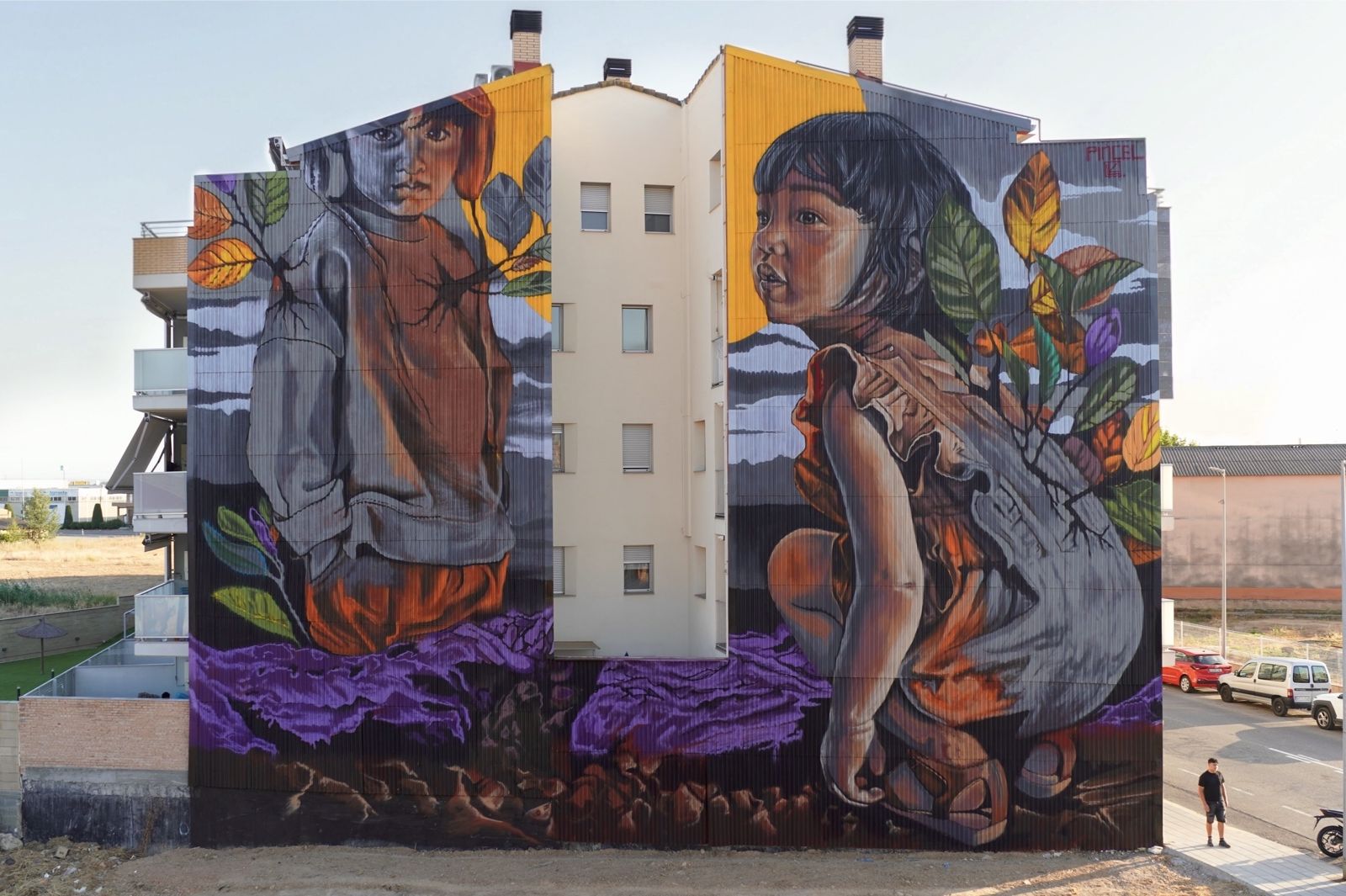
With Rebobinart he painted the wall of La Farinera del Clot for Wall Claim (2020) and, in 2025, Raíces en tránsito at the Kromatic Festival in Sant Andreu de la Barca: a Latin American mother with two children, sitting on a pile of suitcases. We talked with him about migration, the political legacy of Chilean muralism, where he draws the line with brands, and what he is cooking up in the studio.
Interview
Kromatic set out to look at migration from southern Spain to Barcelona. Raíces en tránsito widens that lens. How did the idea come about, and what did you want to say?
Raíces en tránsito didn’t come about as a counter-response, but it was a way of widening the picture of what it means to be a migrant. The starting point was migration from the south of Spain to Barcelona, and I wanted to bring it to my own experience as a Latin American migrant who has lived in Spain for so long. Not to change that vision, but to broaden it and frame migration as a somewhat more global issue.
I did it from what I know: I portrayed a Latin American mother with two children in her arms. What I wanted the viewer to see, if they looked a little further, is that it is actually the same child at two moments — first a small baby, then a little older, which is why he appears half-translucent. She embraces both, and deep down they are one and the same: that child growing up in a new place.
And she is sitting on suitcases, which speak of the journey, of leaving everything behind and starting a life somewhere else. That is what inspired me, and what I wanted people walking past to see.
Your work comes out of tattooing, illustration and painting. How do those disciplines combine in your current style?
I consider myself a multidisciplinary artist who relies heavily on painting — that is what I specialise in — but everything else runs closely parallel to it: tattooing, illustration (I did a lot of digital illustration) and graphic design.
I was lucky to come from the academy, from painting, and then from graphic design and illustration, and I applied all of that during the fifteen years I spent tattooing professionally. Today it all connects with muralism and with the work I do.
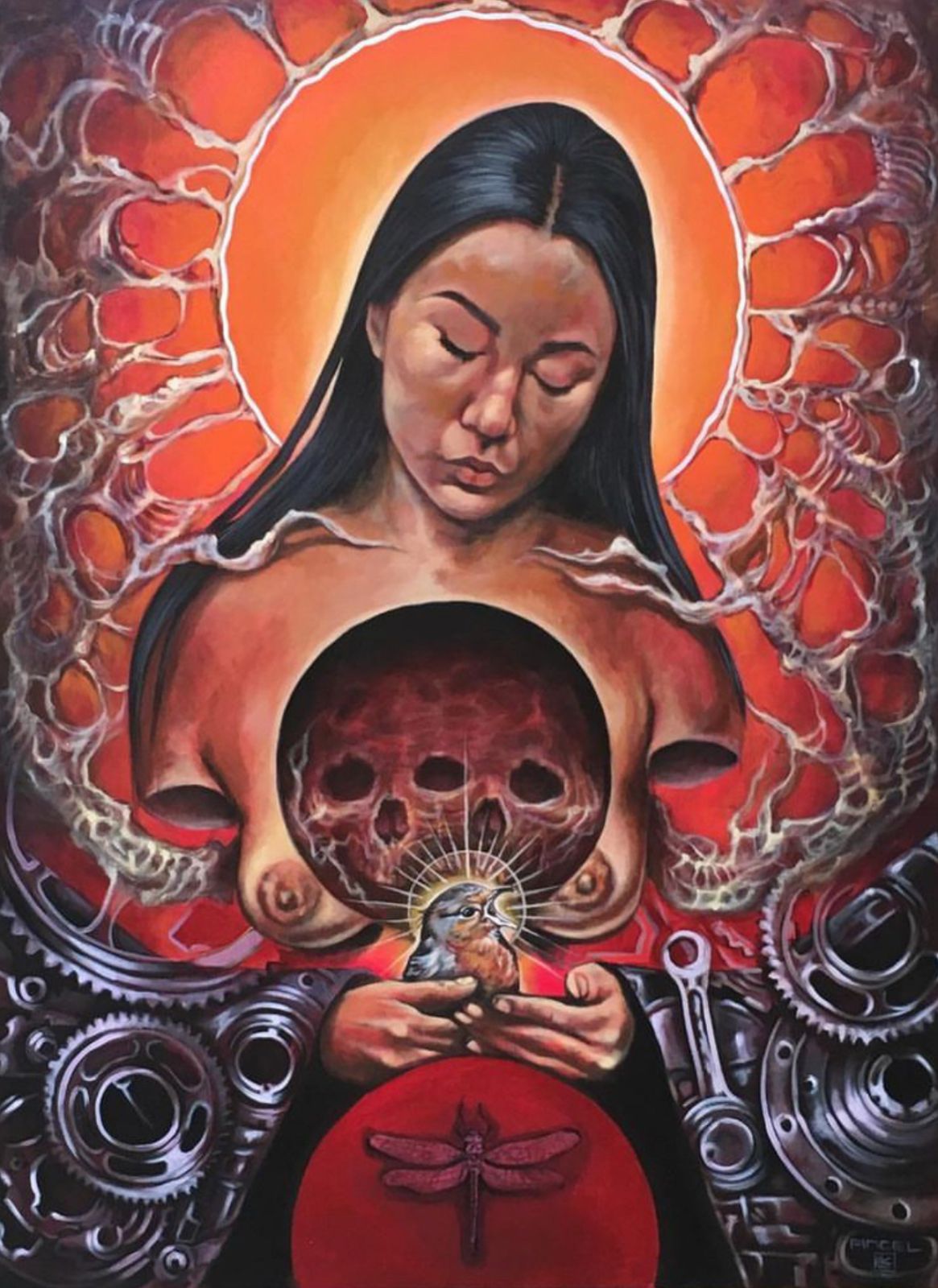
Your approach has a strong Indigenous and political component. What pushed you to work from that perspective?
The Indigenous gaze is, at bottom, a political stance: making people feel that we are represented too, that another vision exists. Pushing back a little against the images imposed by the media, the magazines, the cinema. The paradigm has been shifting, but until not so long ago everything to do with advertising and models was white, blond and blue-eyed. In a way we were being taught that this was what a person was supposed to look like.
My subject, multiculturalism — always from my own point of view, of course — is about making it understood that many of us exist, and that a skin colour or a physical feature has nothing to do with the person you can be. That is how I stand before my work, and that is where I defend it from.
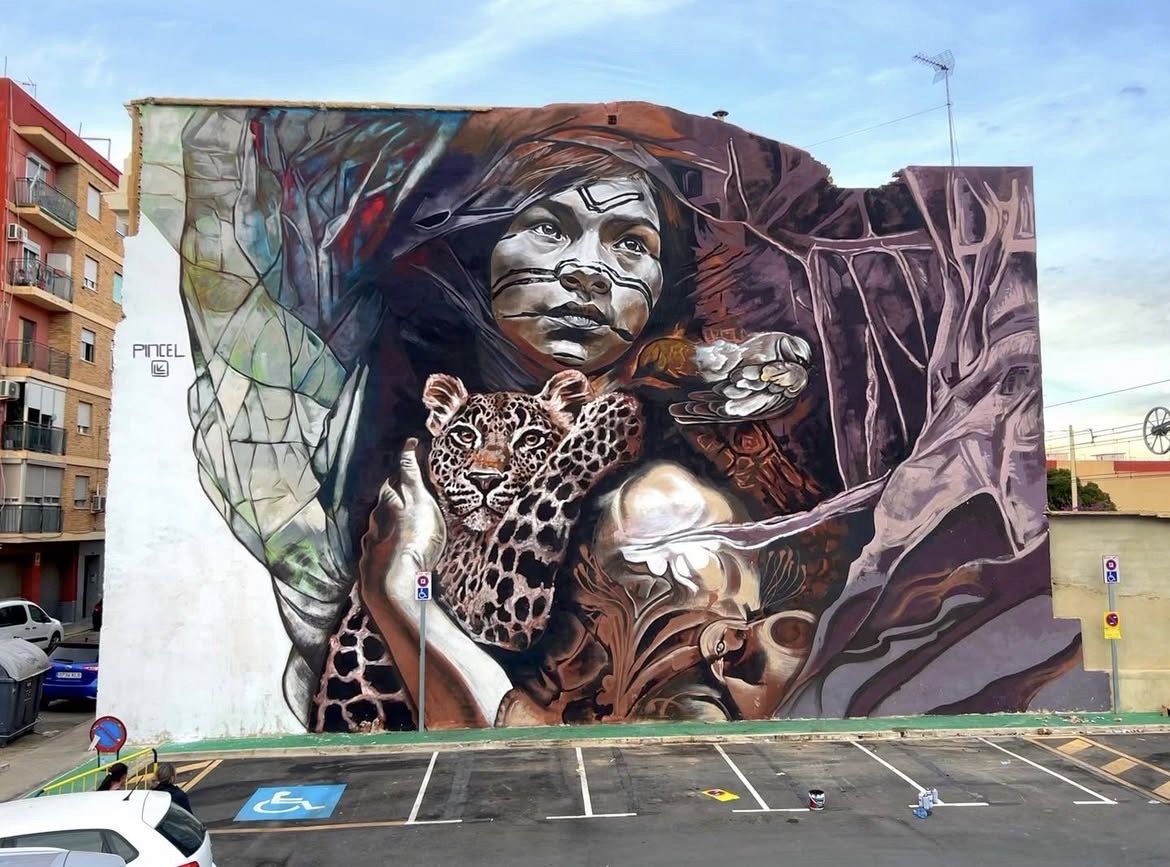
Muralism in Chile carries a strong political legacy, from the Ramona Parra Brigade to the murals of the 2019 uprising. Is that tradition still alive, or is it fading?
I think Latin American muralism in general, from its beginnings in Mexico, has a deeply political stamp. In Chile that is especially true after a seventeen-year dictatorship, and it showed on the walls. Even before that: during Salvador Allende’s campaign, the Ramona Parra Brigade was already campaigning through murals.
I was born in ’82, so I was born under the dictatorship, and all my earliest childhood memories are of looking at streets full of that kind of political mural. At first you don’t understand them, but through your family you pick up the context of what is going on, and you understand that a wall has to say something — that it is an important part of how the street communicates.
I don’t think it has faded. Today we have very important artists — INTI, to name one; the Ramona Parra Brigade itself; Mono González — with a political undercurrent, and I count myself among them. I believe that, aesthetics included, there has to be a perfect balance between the message, what you want to say, and the beauty of the painting. And far from fading, there are now many more artists in Chile making political statements. Caiozzama, for instance, who works with paste-ups and takes a really interesting political stance through his work, and I could name many more. The younger generations see it too: the twenty-year-olds who are painting now come with that same stamp.
It is very hard for political art to disappear in a place where basic issues like education and healthcare are still unresolved. It will always be there as long as those injustices exist, and especially with what is happening now across Latin America, with this shift to the right. Of course there is going to be a response on the street through urban art. Rather than fading, it is being reborn — gathering real strength again.
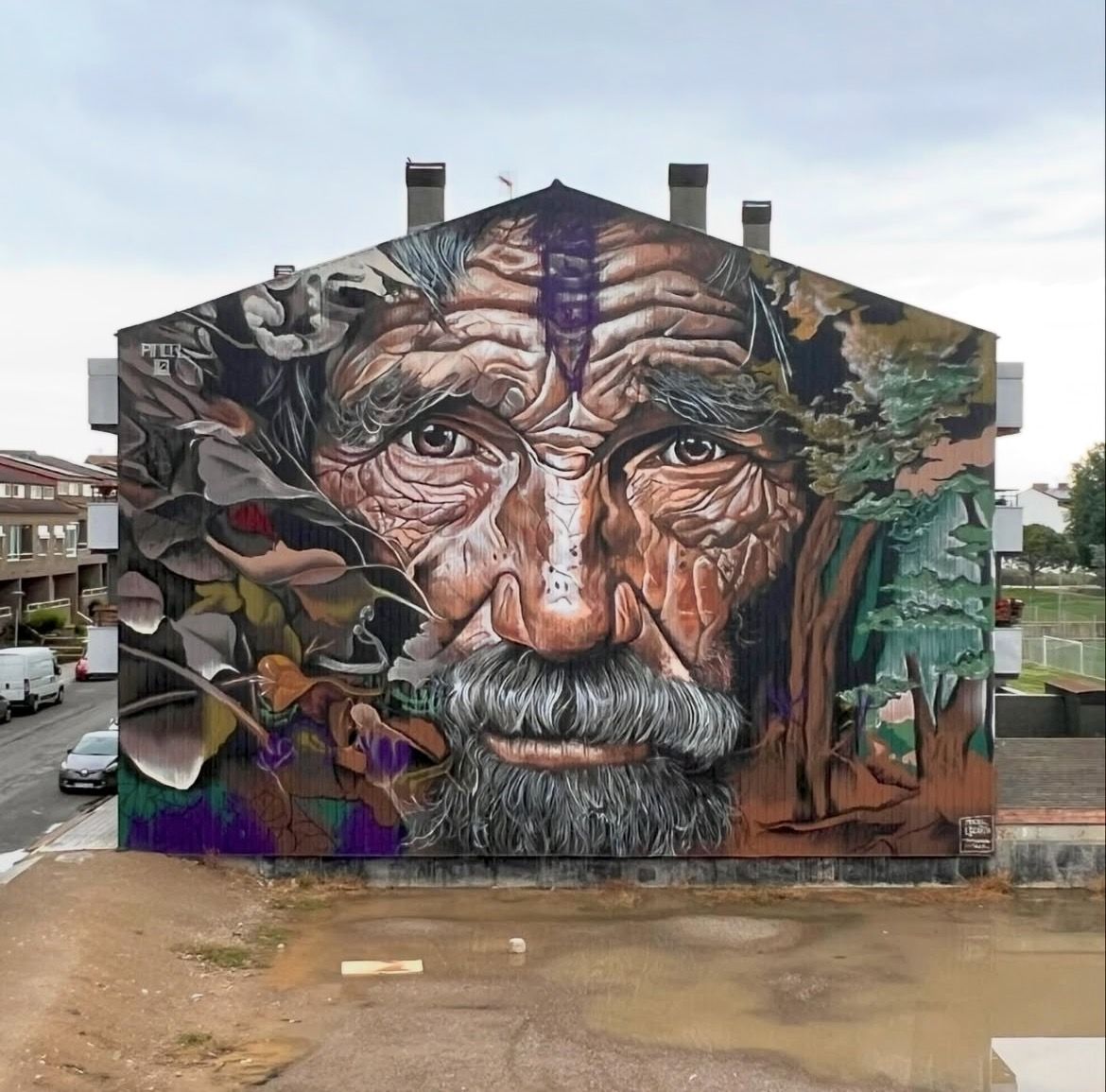
More and more institutions and brands use murals as a tourist draw or a marketing tool. Where do you draw the line between committed public art and advertising dressed up as muralism?
Yes, a lot of people take advantage. There are cases like Blu, who, when people started doing business with his walls, chose to erase them himself. But there has to be a bit of everything. Many artists are in the business of decorating spaces rather than saying something; personally, that is not my stance. My stance is to deliver a message from where I stand, always.
I have been asked many times to take part in propaganda and advertising and I have turned it down, to stay consistent with what I do — but I don’t rule out doing it at some point. Those of us who live from art have to find a way to survive and make a living from it. Where the limits are is something each artist has to decide: how far you can go working with a company that isn’t on your wavelength before you feel bad about it. I wouldn’t do it. But I would work in advertising, from another angle, with brands that don’t clash with what I think or feel.
What are you working on now?
Right now I’m focused — shut away, really — on shifting my visual line a little. I’m doing a lot of studio work: painting a lot, looking for new techniques, working on textures and new subjects, and also on the spontaneity of the street. I’m figuring out how to solve those visual problems, locked in there, outside the festivals and competitions I keep taking part in, which is what I do and what I live on.
I’m also going to give a talk at a university in Colombia on the cultural and economic management of an artist’s career: telling my story and how I have managed to live from art for so long without a second job.
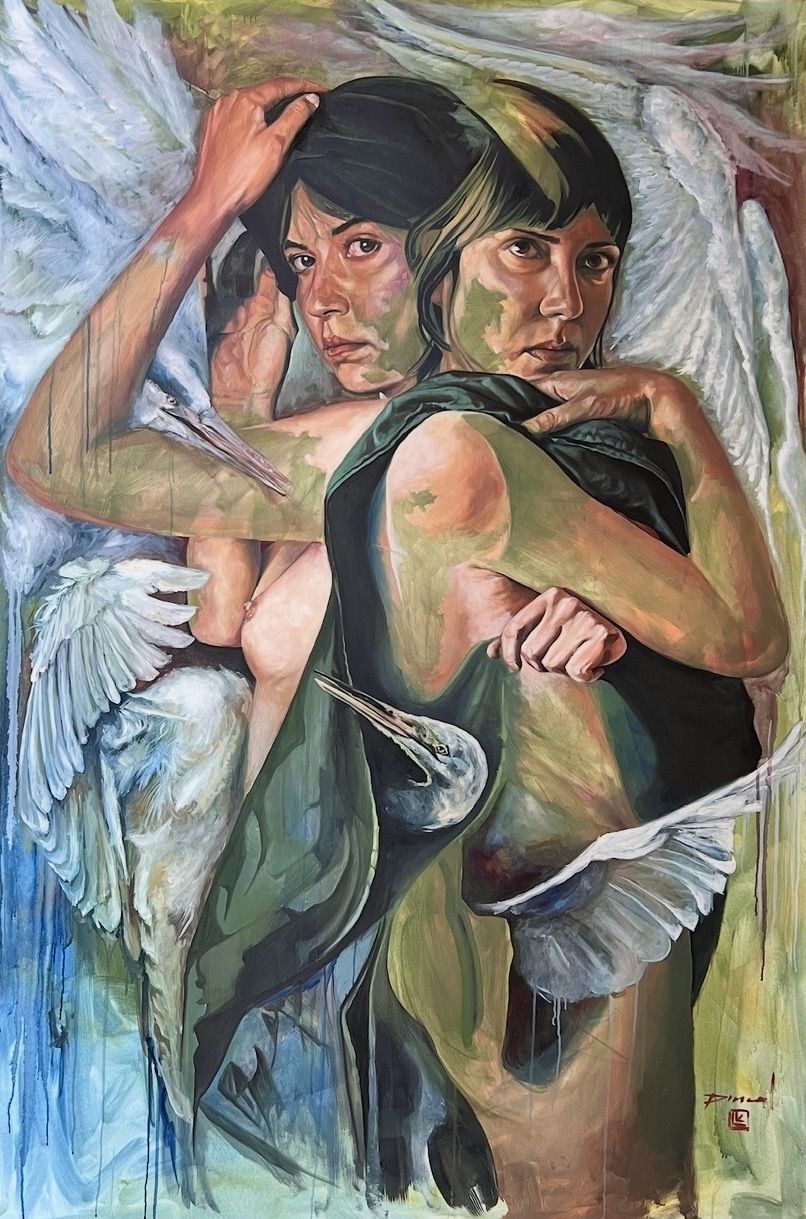
Featured projects with Rebobinart
Two Felipe Pincel interventions produced by Rebobinart: the Kromatic party wall and the wall of La Farinera del Clot.