


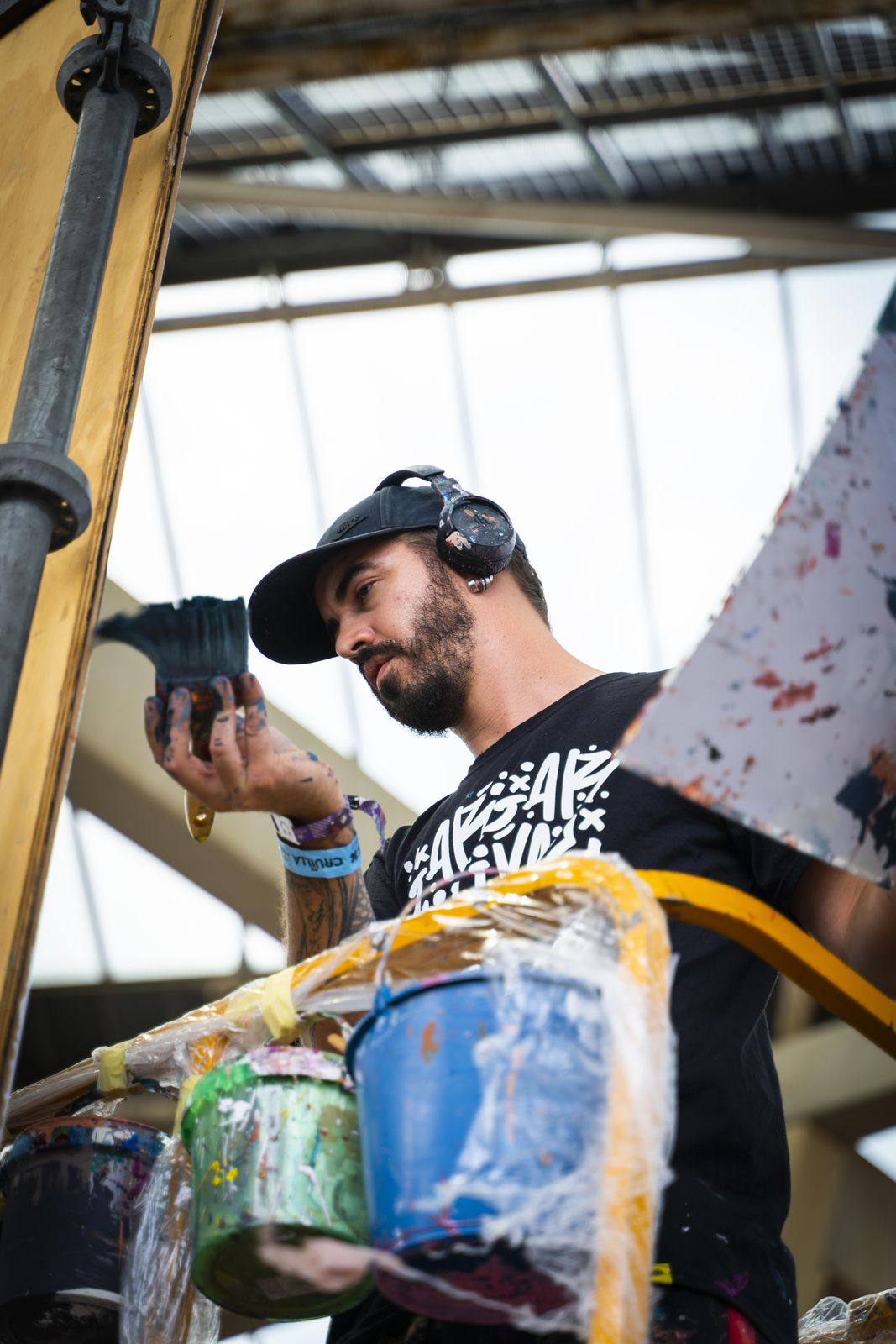
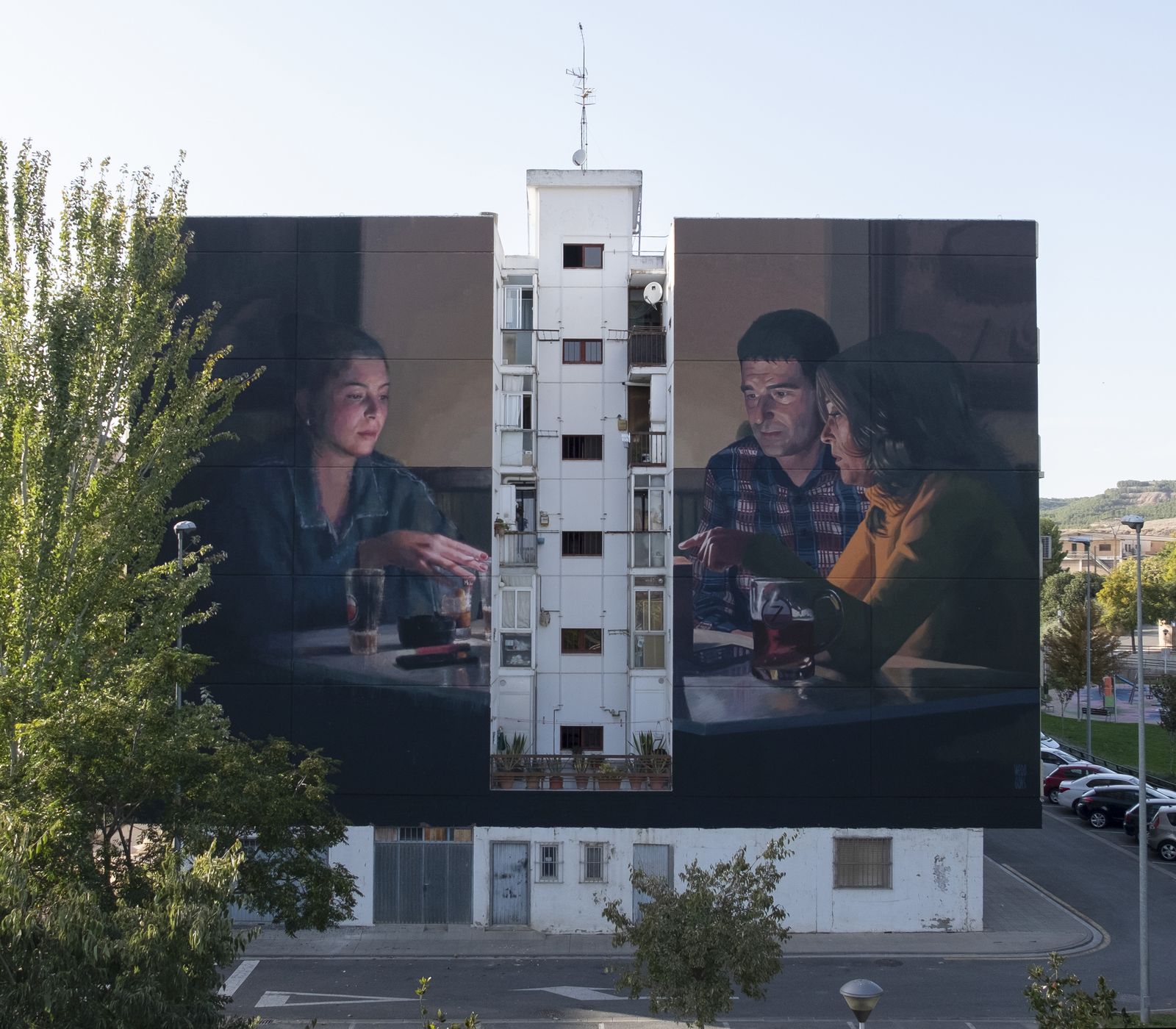
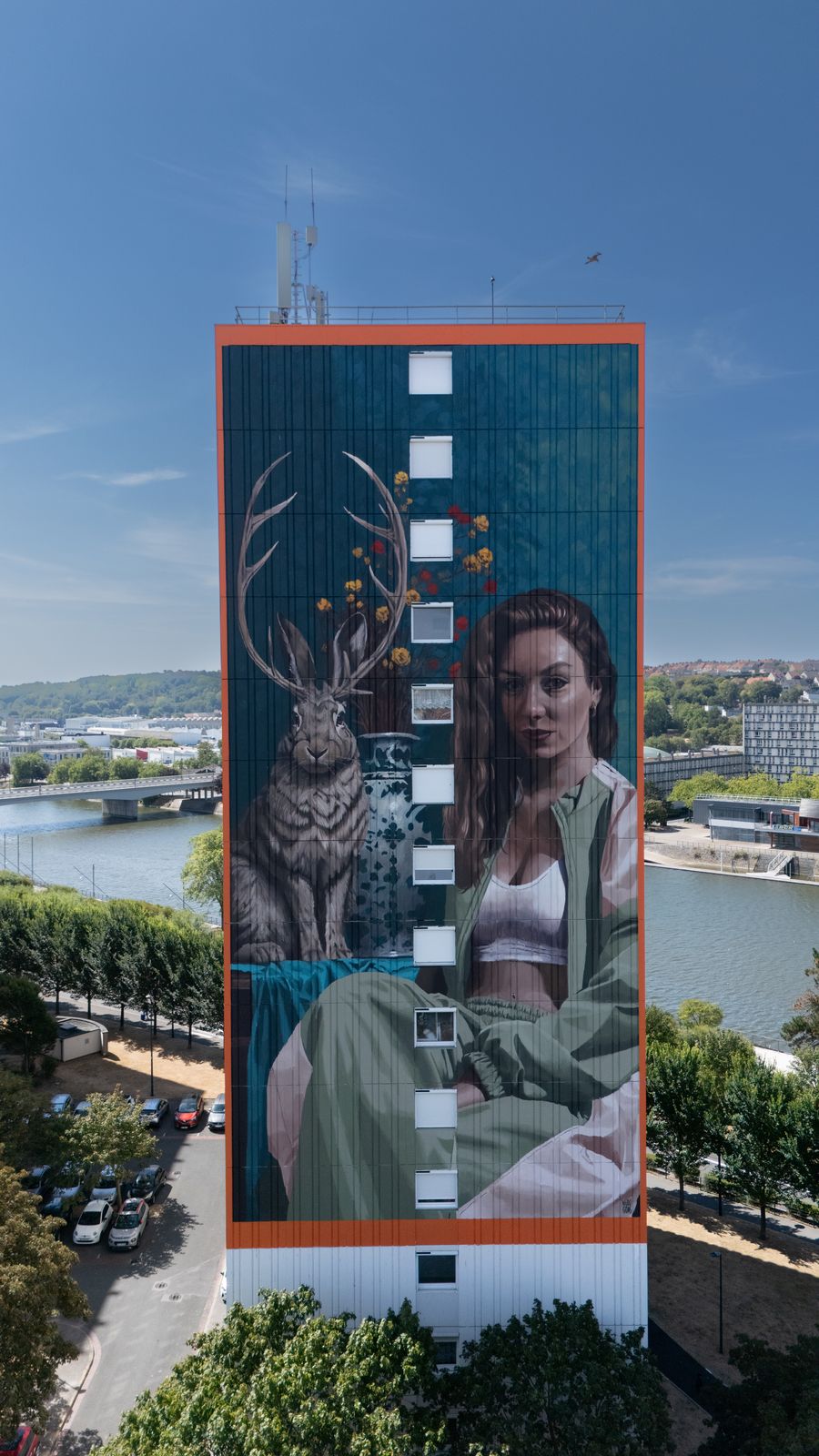
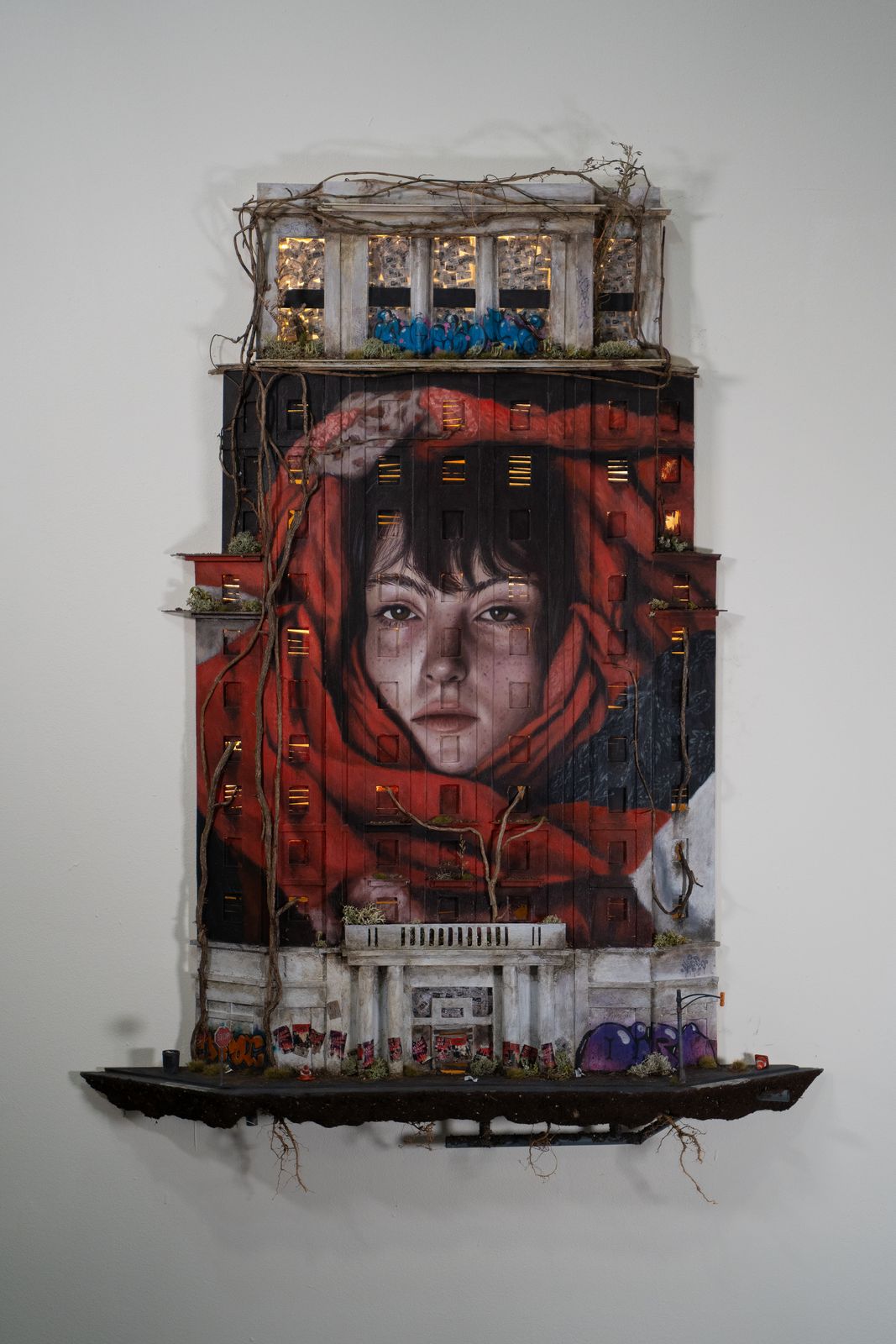
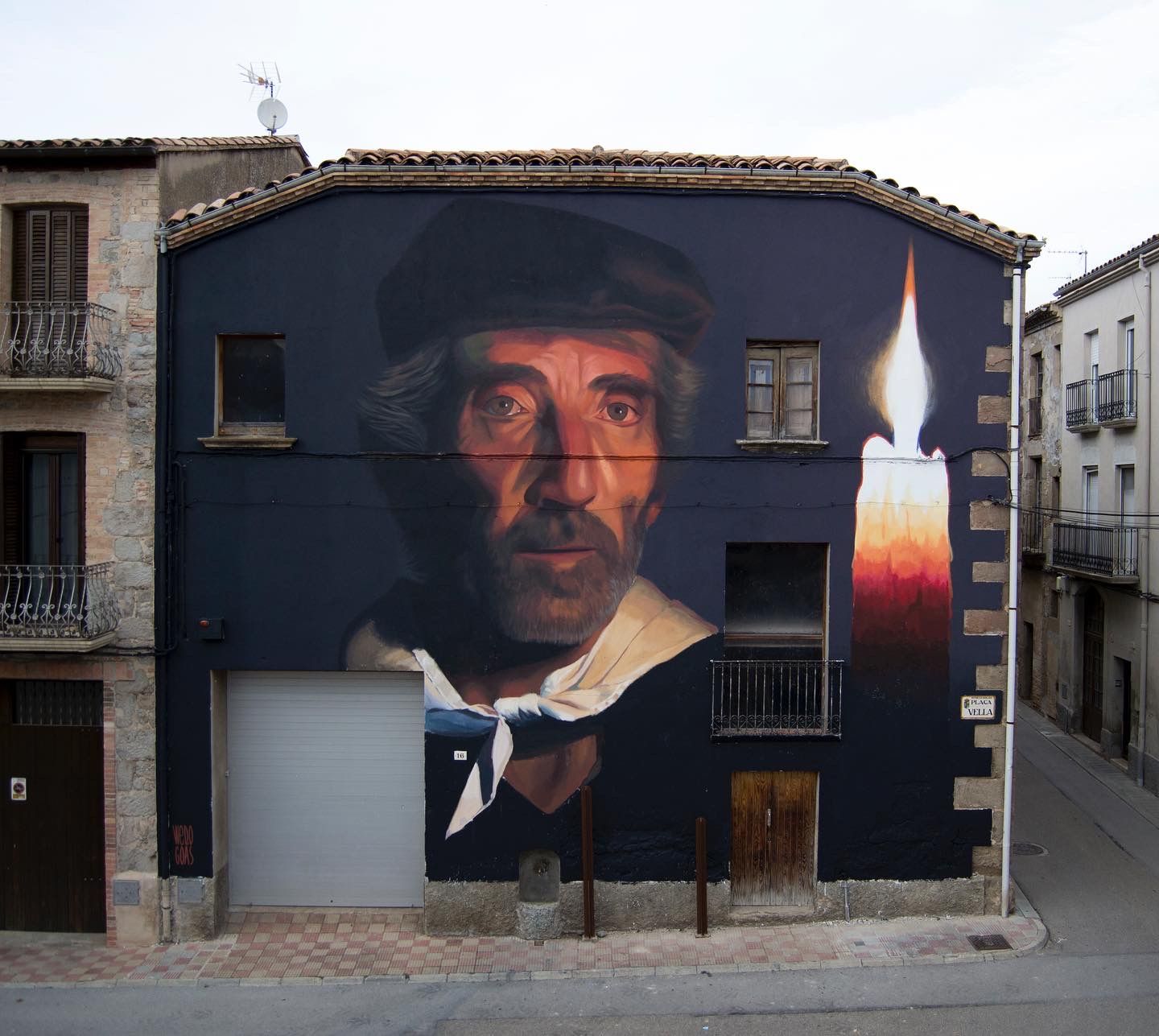
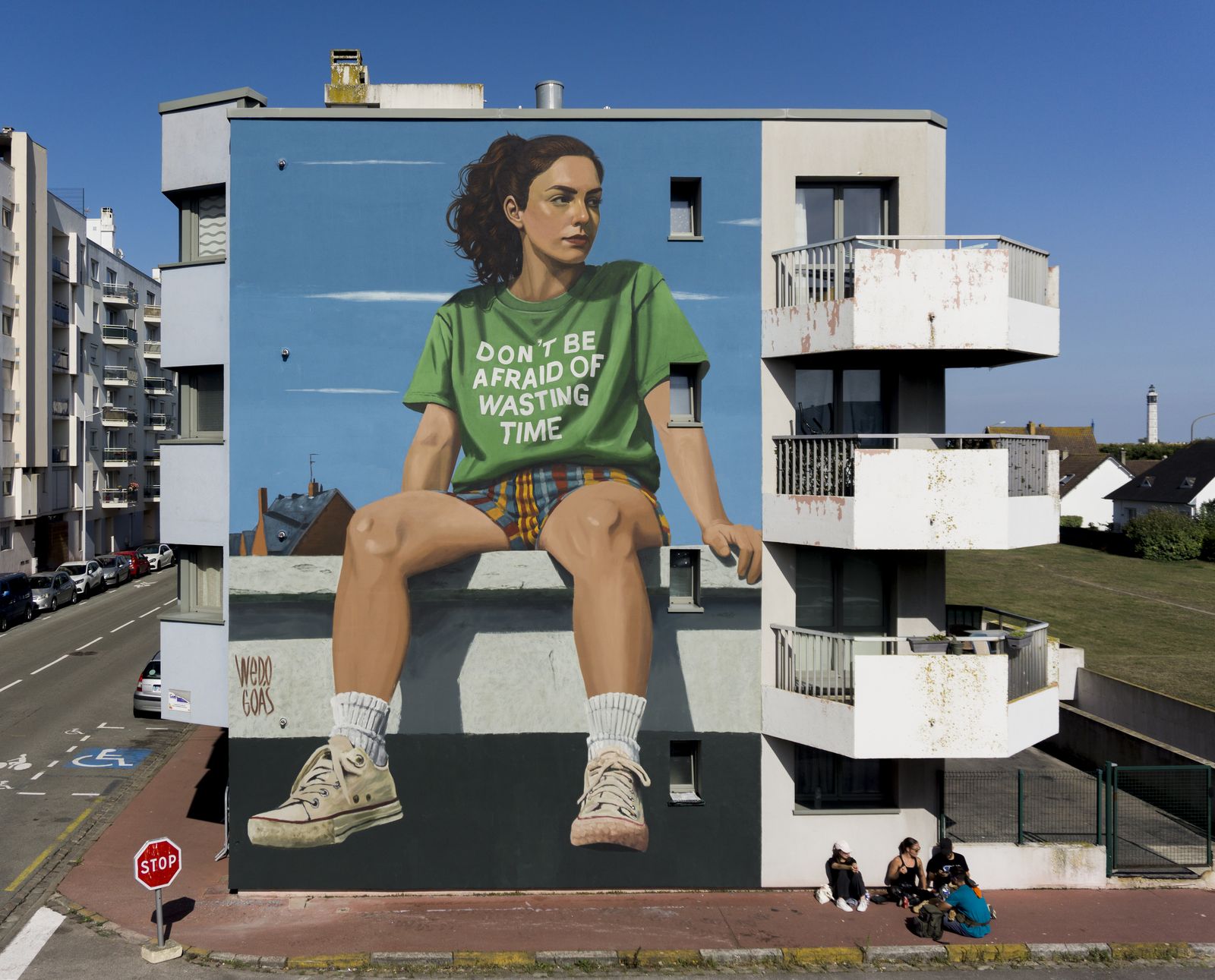
 WeDo Goás (Edgar Goás) is a Galician muralist based in Barcelona, trained at art schools and at the University of Barcelona’s Faculty of Fine Arts. His painting is realist, Baroque-influenced and closely attentive to light and composition, and he builds his images as if they were film stills: a moment, a situation, a gesture that tells the whole story. He has painted residential towers, party walls and facades, and also makes sculptural pieces about consumption and image.
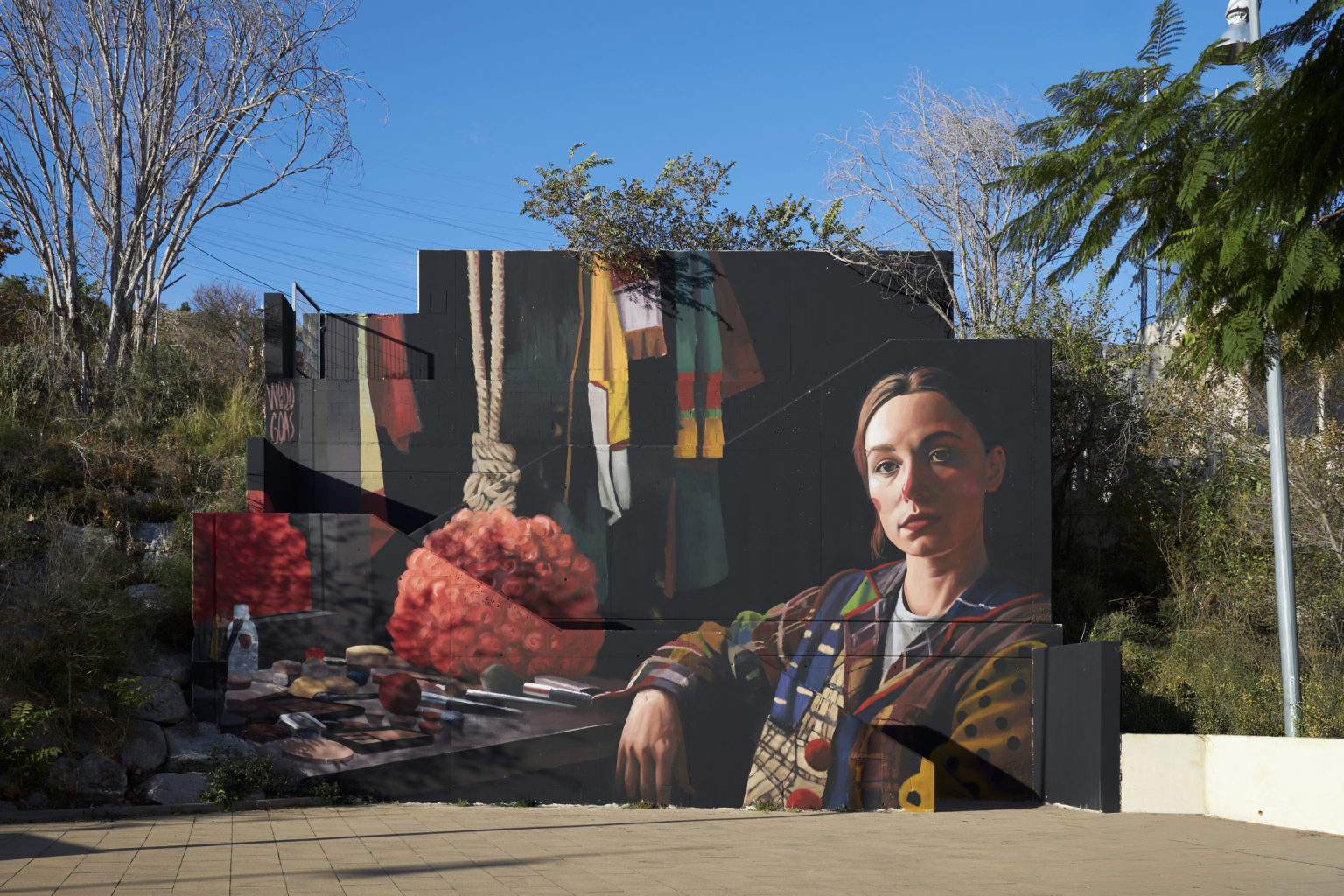
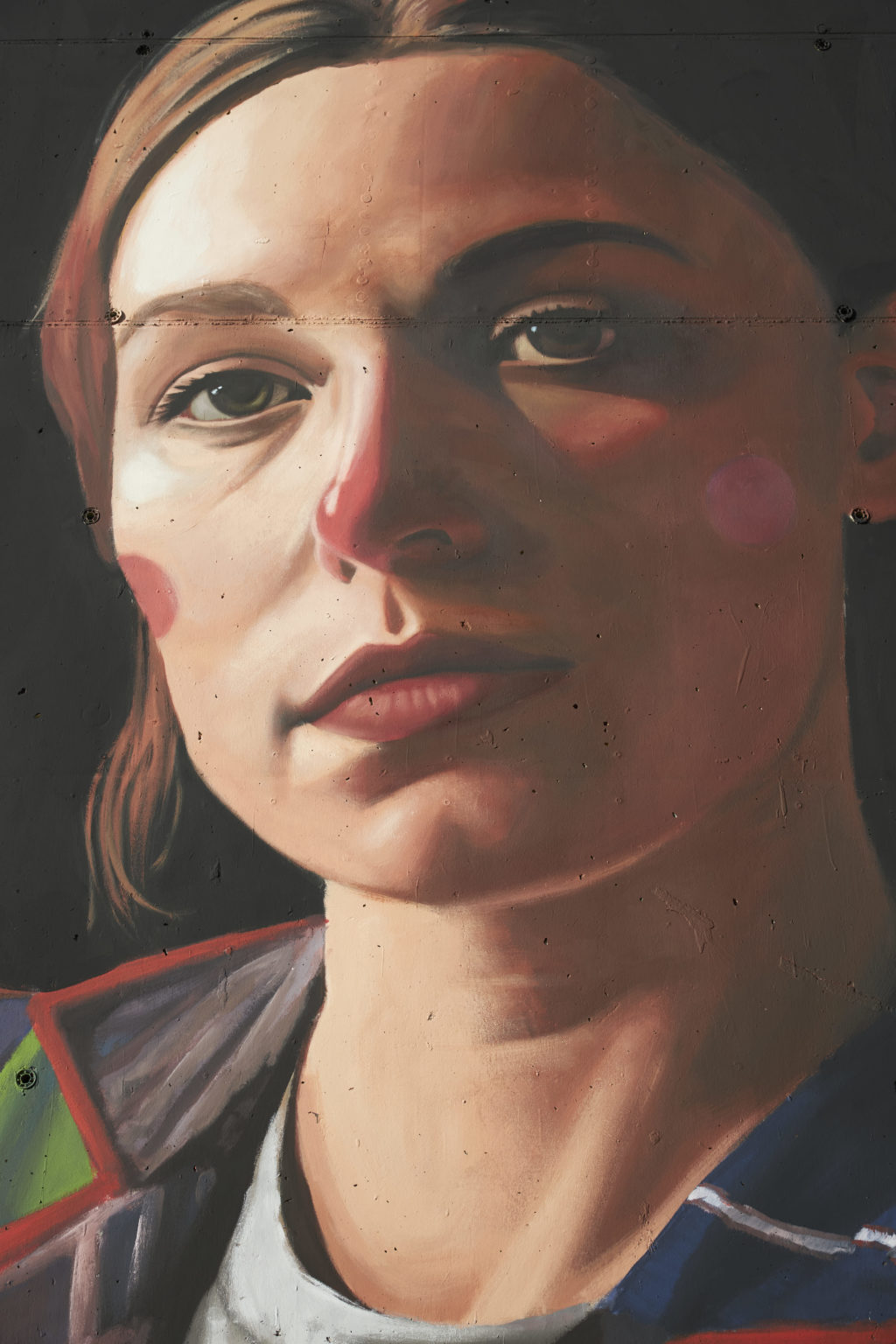
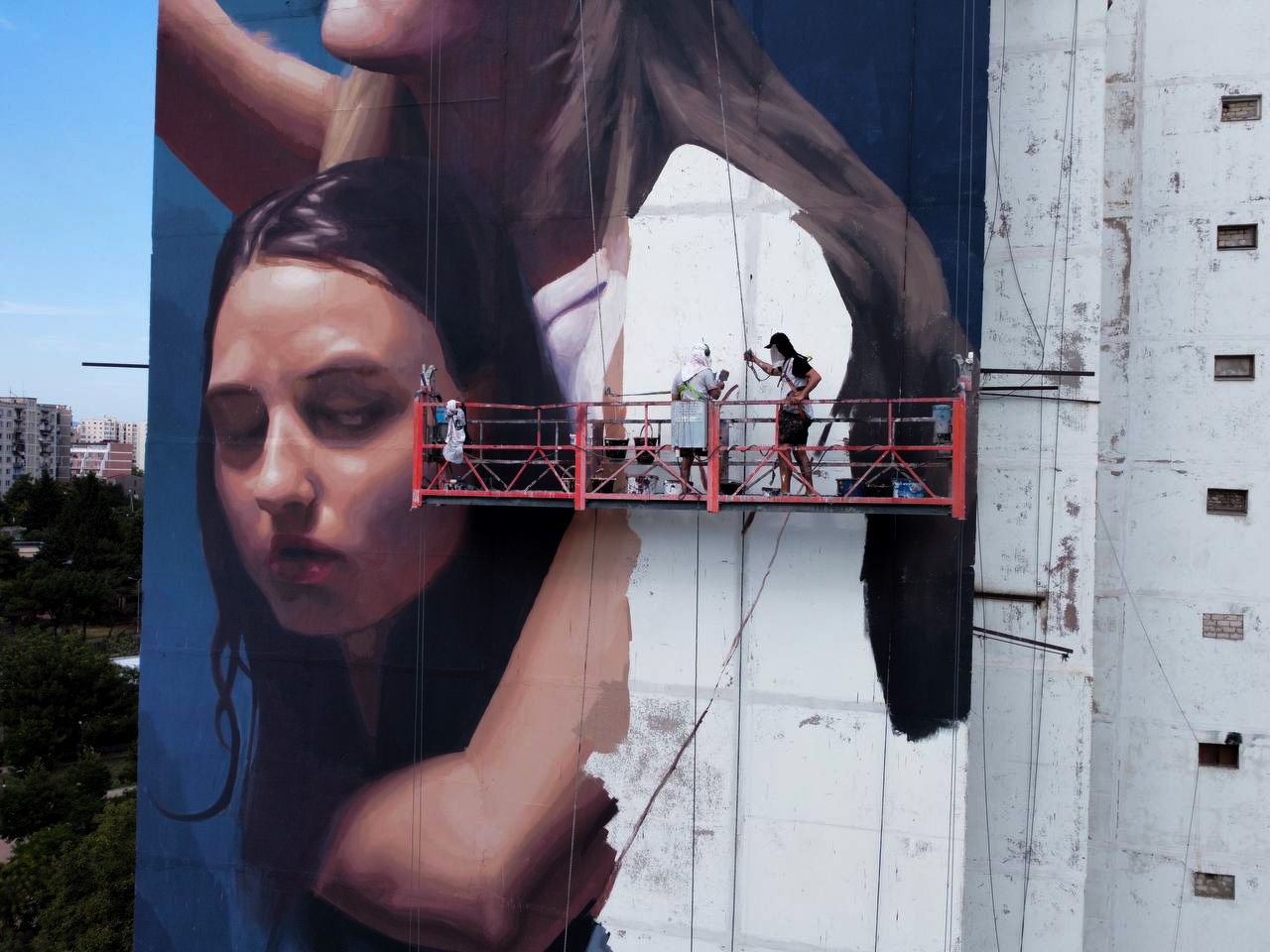
With Rebobinart he painted Back Stage (2025) in the Antonio Cuadrillero passage, in Nou Barris, as part of NOU Sentit Urbà: a tribute to the Circ Social de Nou Barris that puts the focus on what goes unseen, what happens backstage. We talked with him about how he builds a scene, artificial intelligence, the mass production of murals, artists’ precarity, and the limits of urban art when it sets out to be critical.
The interview in three ideas
- AI is a tool, not the enemy. The problem is a system that demands endless stimuli; AI will make it obvious who knows how to control the tool and who is controlled by it.
- Fear makes predictable murals. Knowing that if you don’t give in someone else will take your place keeps many artists from proposing anything daring, and it feeds the sector’s precarity.
- Urban art’s big contradiction: giant banners advertising the latest iPhone are allowed, but not a mural of the same size questioning consumerism or defending the right to housing.
Interview
Your work has a very clear, almost cinematic sense of staging. How do you build that narrative, and how much weight does the idea carry against the execution?
For me, execution and idea usually go hand in hand. Each one shapes the other. The characteristics of the wall and the way you approach painting the mural have a direct influence on how the image is built.
To arrive at an idea I usually picture a scene, as if it were a still from a film: capturing a moment or a situation that represents what I want to convey.
In a piece like Back Stage there seems to be an intention to show what normally goes unseen. What draws you to working from that “backstage” perspective?
I find what happens in the creative process of every artistic discipline really interesting, and the people behind the works. With live performance, in front of an audience, the moments before and after the show tend to be charged with emotion, and in them you can clearly see the person behind it rather than the character. Those moments usually go unseen, and I find it interesting to show them.
Muralism is often understood as something that has to be instantly readable. Do you want your work to be understood quickly, or to raise doubts and second readings?
I want it to have several layers: an easy first reading that catches the eye, but built from small details that you only see if you stop to look at the work properly, and those are the ones that end up revealing its real message.
In today’s context, where images are produced non-stop, what do you think gives an image real weight in public space?
That it is in dialogue with its surroundings, society or architecture. That there is a sincere story or intention behind it, one that tries to offer new points of view, prompt reflection or simply stir a feeling or an emotion.
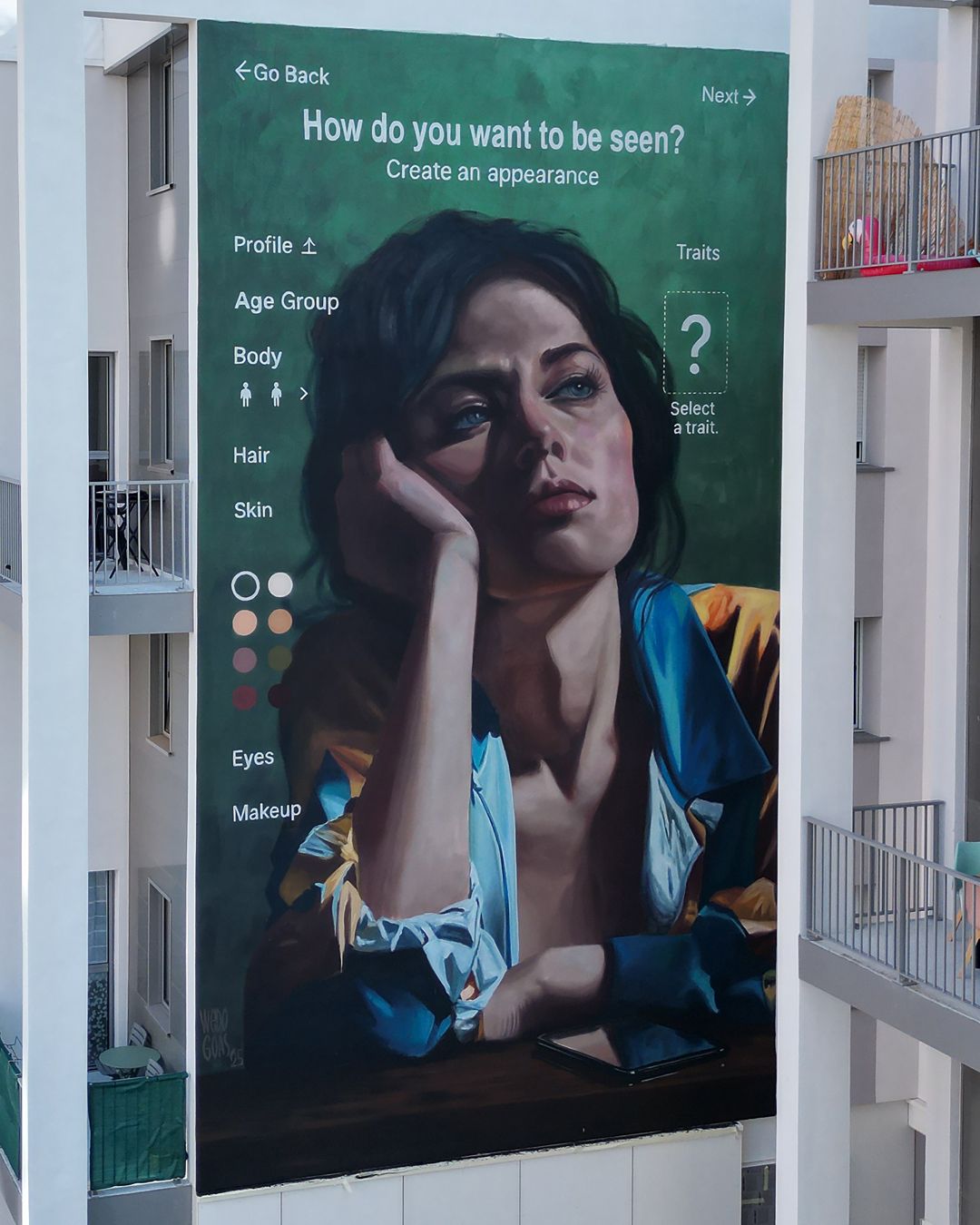
Artificial intelligence is starting to become part of the creative ecosystem. To what extent do you think it can affect the value of artistic work or the perception of authorship?
Artificial intelligence is a very useful tool. Just as we once had encyclopedias that became obsolete with the arrival of the internet, analogue cameras replaced by digital ones, or programs like Photoshop that took editing to another level, every technological advance can and should be put to use.
How we use these advances is entirely up to us. We will soon see the different paths artists take and how this affects the art world. I also think the more “manual” crafts will regain value.
As for authorship, since social media and the internet arrived everyone has been able to see and replicate other people’s work, something that has been happening for millennia; the difference is that until now you needed certain knowledge or skills to do it. This will only make it obvious who has those abilities and who doesn’t.
After all, a few years ago, if you wanted to paint a zebra, say, and you were the kind of artist who works from photographs and couldn’t travel to Africa to take pictures, you searched the internet for reference photos, then made the design and painted it.
Today, with AI, that process has become much simpler: AI lets you search for references far more precisely, which means better references. Of course, that is just one example of the thousands of uses AI can have, and it all depends on how each person decides to use it.
Beyond the tool itself, does it worry you that the value of craft is shifting towards the quick generation of ideas or images?
People have always had the ability and the need to create images and ideas. The problem is the world we live in: an insatiable capitalist system that seeks to produce stimuli, of whatever kind and quality, to give people the dose of dopamine they need, a dose that keeps growing. That puts us on a wheel that is hard to get off, and of course AI is the perfect tool for it: it allows anyone with no artistic background or knowledge of the craft to flood the world with sterile images and content.
I also think this situation will bring value back to the people who manage to create calmly and escape all this, working from knowledge, calm and love of the craft.
Do you think AI could end up homogenising visual languages, or is there still room for a strong voice of your own?
There will always be room to create with your own voice. What’s more, I think AI will make that more obvious, when it becomes perfectly clear who has managed to control the tool and who has been controlled by it.
The boom in festivals and mural projects has transformed the sector. Are they producing relevant work, or in some cases turning into the mass production of murals?
In many cases, unfortunately, it is becoming mass production, but that happens in every sector as it grows; it is a natural transition towards a better model.
To what extent do you feel artists adapt to what is expected of them in these contexts instead of proposing something of their own?
The huge demand for artists, the fear of missing out on opportunities and knowing that if you don’t give in someone else will take your place is creating situations where artists are afraid to propose new, daring things. In the same way, this drives the sector’s precarity, with artists forced to give ground creatively and financially just to make a living from a craft that is hard enough already.
If conditions were better for artists, and they could work from a different position and invest the time it takes to make a work, they could be far more daring and free.
When it comes to the public, do you want your work to be accepted by local residents, or should art in public space also create discomfort or conflict?
You always have to respect the neighbours, because that space is theirs and they live in it.
The people you should make uncomfortable are the ones the critique is aimed at.
Have you had experiences where the public’s response went in a very different direction from what you originally intended?
Luckily, I have never been in that situation. Of course I have come across people who have told me they disagreed with certain projects or situations, but everyone has the right to speak and deserves to be heard.
When you work on a project like NOU Sentit Urbà, how do you balance context, creative freedom and outside expectations?
I’m aware that the mere fact of painting in certain cities already comes with creative limits. In Barcelona I’ve hit a lot of walls when it comes to murals that touch on certain subjects.
But with NOU Sentit Urbà the aim is to show the neighbourhood’s personality and what goes on there, and in that sense it was easy, because the neighbourhood is full of life and grassroots initiatives like the Ateneu Popular 9 Barris and the circus culture that has grown up there.

Looking at the sector as a whole, where do you think the main limits or contradictions of urban art lie today?
I think the main limits are imposed by the government of the place where you paint: there are certain subjects it is always better not to touch, because they can work against them. On other occasions, which in my experience are rare, you have complete freedom to express yourself.
The biggest contradiction is that in many places it is fine to hang giant banners on seven-storey buildings in the centre of a big city advertising the new iPhone or any other product, but it is forbidden to paint a mural of the same size, in such a prime spot, questioning consumer society, the right to housing or any message in support of human rights.
What would you say is really working, and what seems to be running out of steam?
Unfortunately, I think what is working is decorative art, or art without a clear message that sparks debate. And, in keeping with the times of repression we are living through, we are going backwards on the right to free expression and on accepting urban art as a tool to make society’s concerns and needs visible.
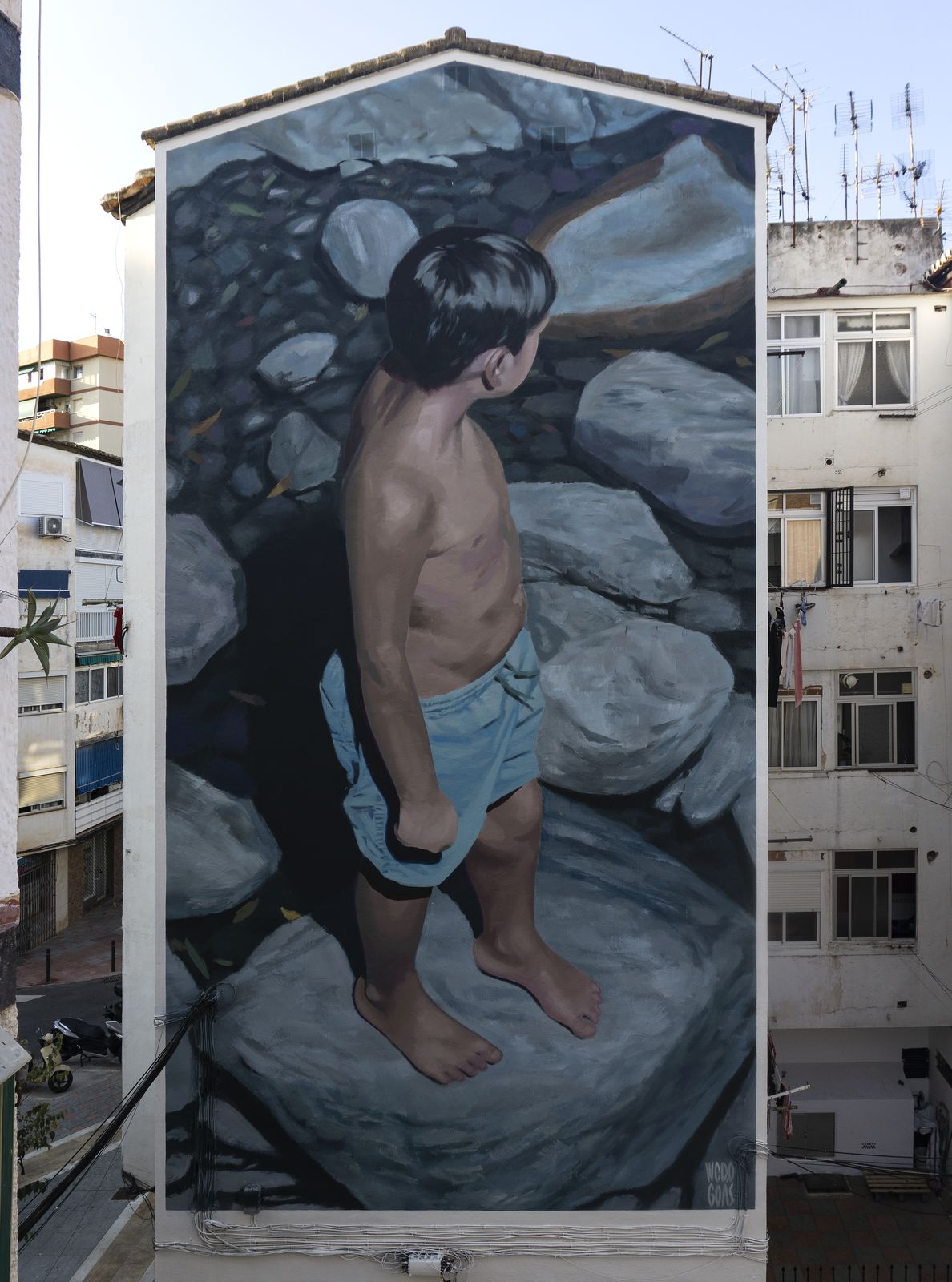
More of the artist’s work: wedogoas.com.
Featured projects with Rebobinart
WeDo Goás’s intervention for NOU Sentit Urbà, the Nou Barris urban art project produced by Rebobinart.


