


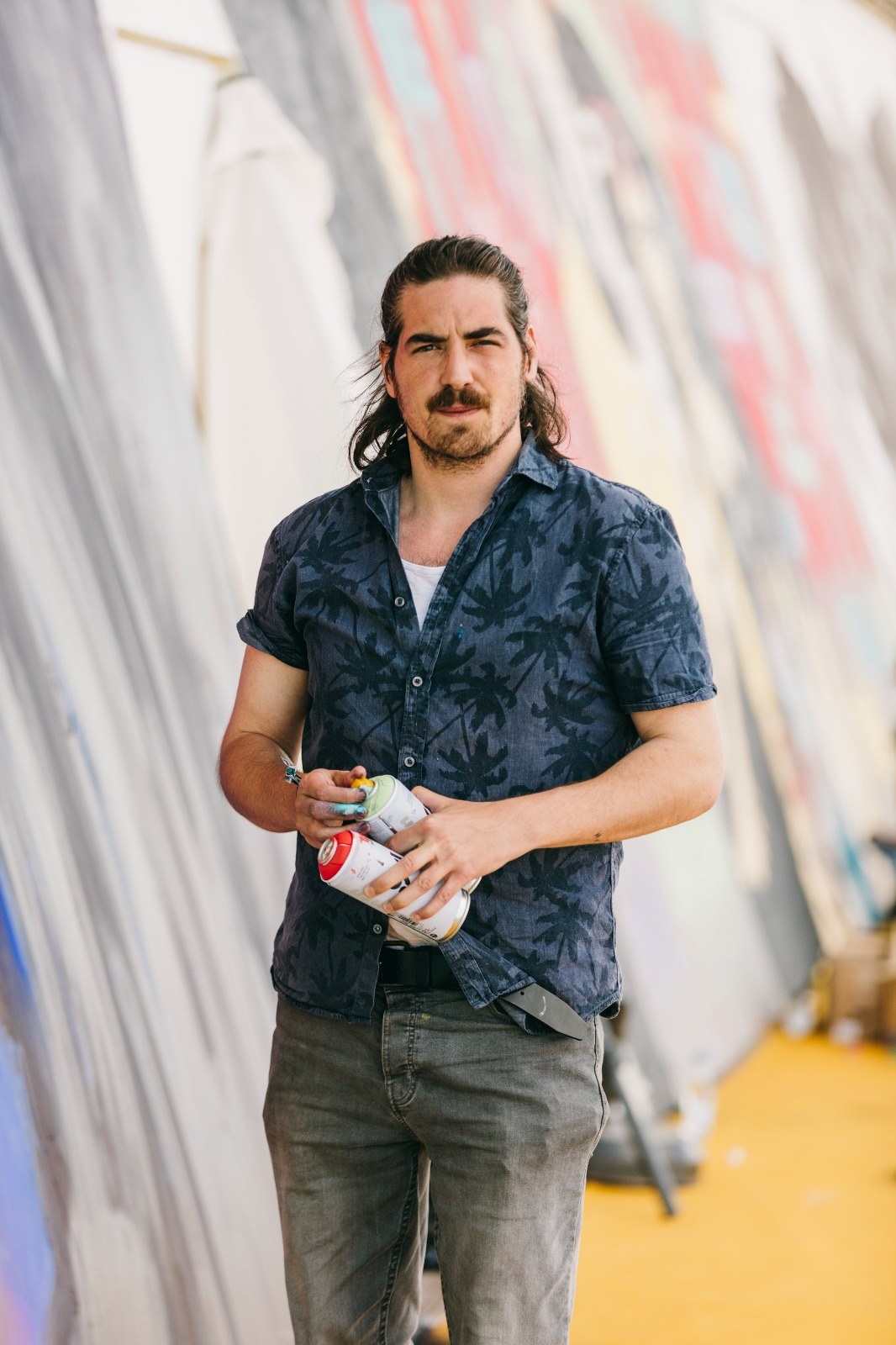
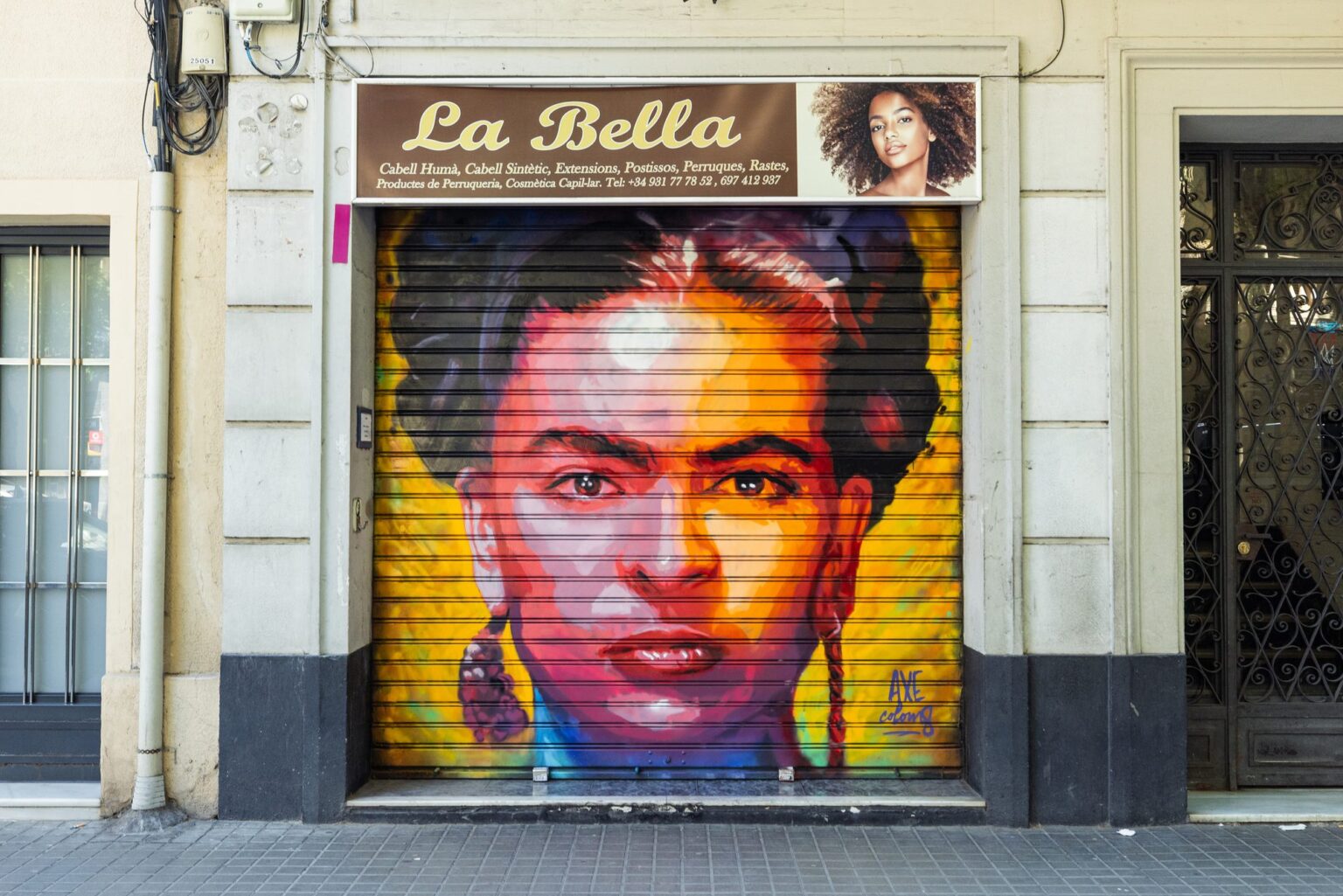
 Axe Colours (Adrià Bosch) started painting in 1999 with Oriol Piquet, a childhood friend. In 2009 they founded AXE Colours with a tribute to Pepe Rubianes at Tres Xemeneies. Since then he has painted TV series characters in Gràcia, worked for FC Barcelona and made shop shutters the core of his work. With Rebobinart he took part in Persianes que fan barri (2026), organised by the Barcelona Creativity & Design Foundation, for which he painted fifteen portraits of cultural and LGBTIQ+ icons on the shutters of the Xarxa de Comerç Divers, in the Eixample.
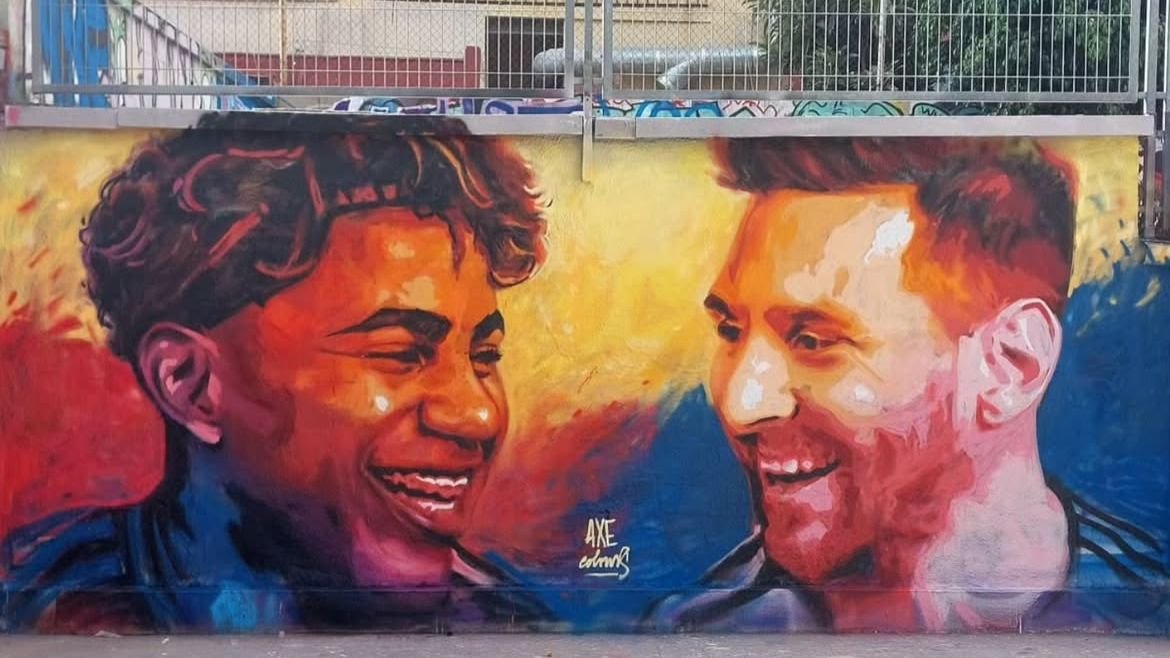
In July 2026, Axe Colours painted a mural of Messi and Lamine Yamal face to face in the Gràcia neighbourhood, timed with the World Cup final. He paid for it himself. A few hours later, someone covered it with a slogan: «A Gràcia, només Club Esportiu Europa. Contra el Futbol Modern» (“In Gràcia, only Club Esportiu Europa. Against modern football”). The artist who had filled the neighbourhood with portraits of popular characters found himself, this time, at the centre of a protest. The story was covered by outlets such as Metrópoli Abierta and Tot Barcelona. We talked to him about going from graffiti to making a living from painting, the link between murals and gentrification, his commissions for Barça, and what happens when a street artwork sparks a conflict with the neighbourhood.
Interview
Let’s go back to 1999. You and Oriol Piquet, childhood friends, start painting as Smaug and Gúma. How did you discover graffiti and where did you paint your first pieces?
We were already good at drawing as kids, and a mate of ours, Iñaki (Egea), had started spray painting and writing tags with some friends from the Llotja art school. He got us into it and we decided to give it a go. We painted our first spray piece at our old school, Escola Tàber, which had been abandoned because of structural problems.
We did some tags around the neighbourhood, but we soon realised we preferred spending the whole day painting. So we went to paint on the Ronda de Dalt, a concrete wall hundreds of metres long. We also spoke to the local councillor to make the wall official and paint without any trouble. I painted figurative work: ideas and sketches I’d done during class.
How do you go from painting on the Ronda de Dalt to setting up a professional studio? What changed in 2009?
We kept learning spray technique and getting better, each with our own style. We were good at it and people quickly showed interest. We did a few one-off commissions, but it wasn’t until 2009 that we decided to try it professionally. In one afternoon meeting we settled on our goals and the name. Shortly afterwards Pepe Rubianes died, and we loved him, so we decided to paint a tribute to him in the Tres Xemeneies square, which got a lot of media coverage. That’s how AXE Colours was born, and the first job we were contacted for was a large-format mural at Tibidabo.
You describe yourselves as a studio for “decoration, graffiti, murals, street art and canvas” and say you use graffiti as a channel for expression and promotion. That second word makes part of the scene uncomfortable. Why not you?
Yeah… maybe I’ll have to drop the “studio” bit, ha ha. At first we started with a very commercial approach. We don’t come from artistic families and our priority was being able to make a living from painting. That has changed over time.
Obviously, decorating or intervening in outdoor spaces makes ideas, concepts and images visible. For me there’s no problem with promotion per se: the problem is who you promote. Promoting a local baker’s business seems like a very good idea to me, for him and for the neighbours. My conscience is very clear on that.
Walter White was the first in a long series of characters you painted in Gràcia. Then came Game of Thrones and The Walking Dead. Why did you go for these TV icons?
Walter White got a lot of attention. It also opened AXE Colours’ new solo phase and set the colourful style we’re known for. It was the TV series boom, and I liked the idea of putting the spotlight on a new way of making quality “cinema”, with time, a pause from today’s fast-food world. It worked really well, so I kept painting TV characters in my style.
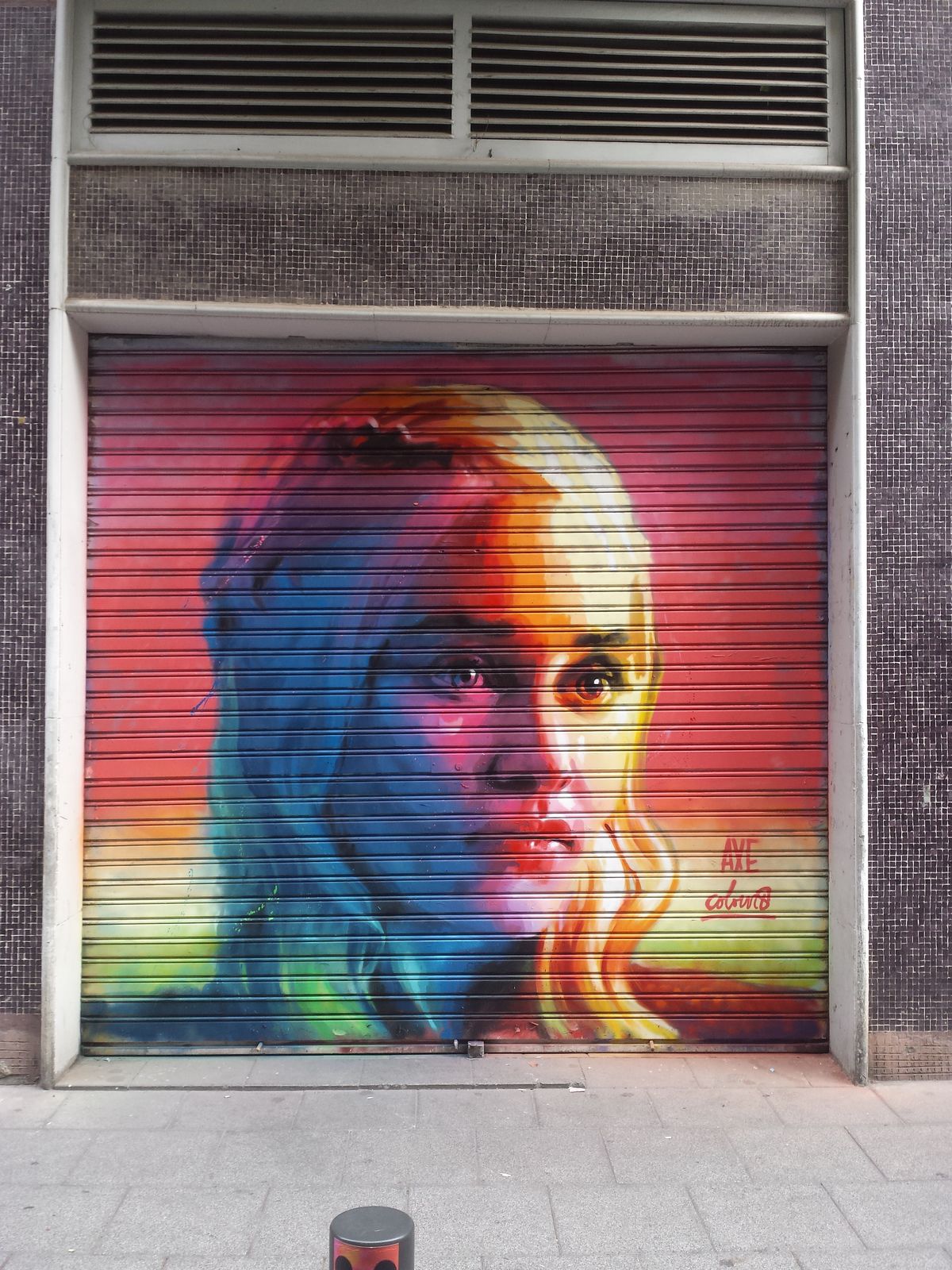
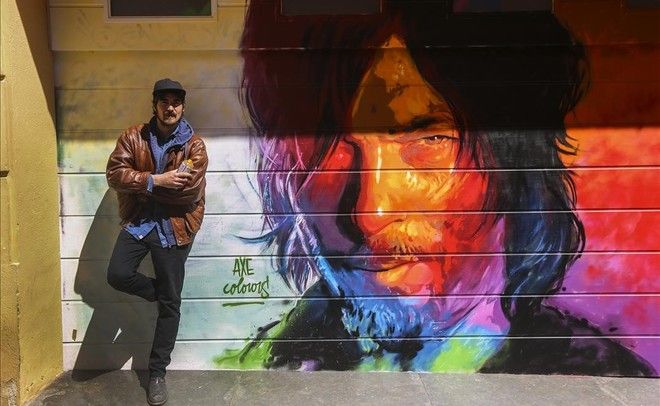
Murals can make a neighbourhood more attractive, but some people link them to gentrification. You’ve faced that criticism. What’s your answer?
Yes, I’ve been accused of gentrification, which I don’t think is true in my case. Gentrification is systemic to the neoliberal capitalist system we live in. My clients are lifelong residents of the neighbourhood, and if decorating their business or their home helps them, or is a nice gesture towards their customers and neighbours, then all the better.
There are cases of big property owners who encourage street art or murals to push up the value of an area, but that’s not my case.
You’ve painted Barça on the street, but you’ve also worked directly for the club. How did that relationship start, and where do you draw the line between being a fan and working on commission?
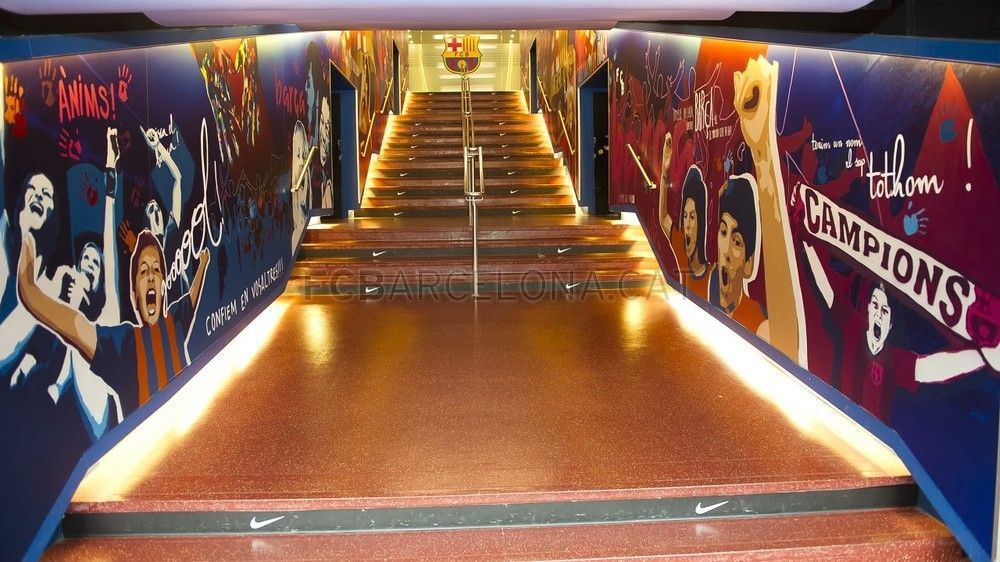
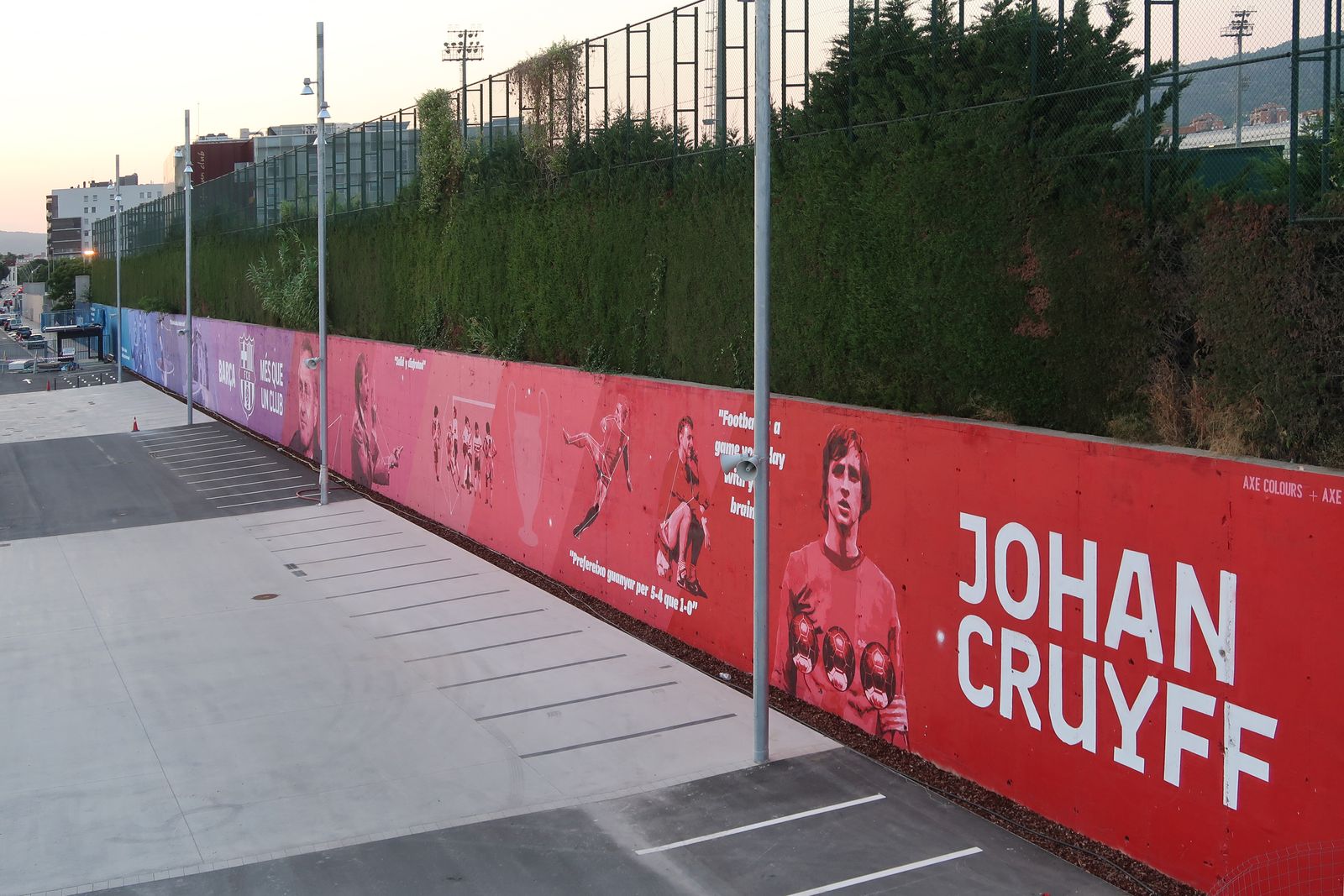
As Barça fans, we’ve been proud to paint for the club. It started with the players’ tunnel, in the Luis Enrique era. Later I ran several graffiti workshops at the Saló de la Infància, on Sant Jordi, at the Gamper and at the Clásicos; decorated the Barça Store and the Barça TV studio; painted a giant banner for freedom of expression; and finally the mural at the Estadi Johan Cruyff for its opening.
And the line between a fan’s tribute and a job… well, they pay you.
In July 2026 you painted Messi and Lamine Yamal face to face for the World Cup final. Where did the idea come from? Was it a commission?
I was watching Argentina against England and Argentina were losing. Since I’d been painting a lot lately, I felt relieved… But in the end they came back, and come on: I’ve painted seven portraits of Messi and, recently, two of Lamine. I couldn’t not paint this mural; I felt “obliged”. And honestly, I’m very happy with the result. I paid for it myself.
The mural lasted only a few hours. Someone covered it with the message «A Gràcia, només Club Esportiu Europa. Contra el Futbol Modern». How did you take it? How do you read that protest?
Luckily I had time to take photos and videos and do interviews. But I’m sorry, because a lot of people wanted to see it in person. The people who painted over it are anti-system: they’re against modern football as part of the system. And since I’m pretty anti-system myself, I don’t think it’s entirely wrong to criticise it. But it annoys me that they use me as a platform for their message, when I’m just a hard-working guy with a very clear conscience about the work I do.
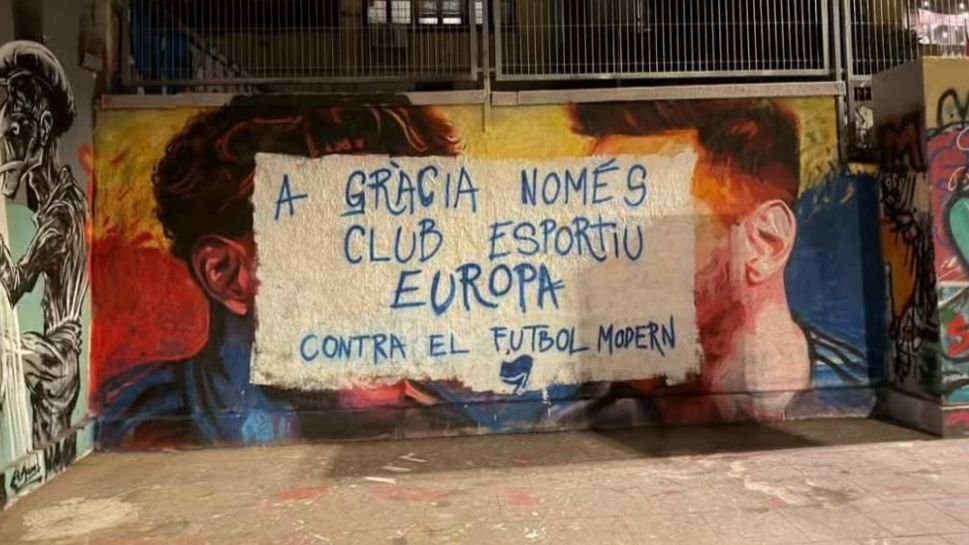
Photos of the mural, before and after the slogan: Axe Colours (published in Metrópoli Abierta).
I know people at Europa and some of them have apologised to me personally. I think that in Gràcia, as in many other neighbourhoods, people are fed up with being forced out of their homes by this voracious gentrification.
Beyond this episode, what’s your relationship with the neighbours like when you paint a shutter? And what do you do when someone damages one of your murals?
Neighbours always appreciate and value these artistic initiatives. Painting on the street is very rewarding, even though every time you start a shutter, until it’s well under way, a lot of neighbours are suspicious or look at you warily. But in the end, when they see the piece taking shape, they’re really supportive.
My rates for shutters are lower than for canvases or indoor walls, because I understand that on the street there’s a risk they’ll get damaged. If something needs fixing and it’s minor, I touch it up for free or for something to cover the paint and the effort. If they cover the whole thing, there’s nothing to be done.
Part of the graffiti scene considers commissioned murals to be decoration, not street art. You come from 1990s graffiti: how do you see that boundary?
I understand everyone has their own beliefs. And I agree that the purest graffiti is vandal and illegal and, in most cases, done fast. When you want to paint a bigger piece, or with more colours, or more detail, you need more time, and that’s where many of us preferred to paint calmly in permitted spaces, which is what today we’d call muralism or street art. It’s fine if they want to draw that distinction, but I don’t think one excludes the other: you can make a great work of art and have it be a paid commission.
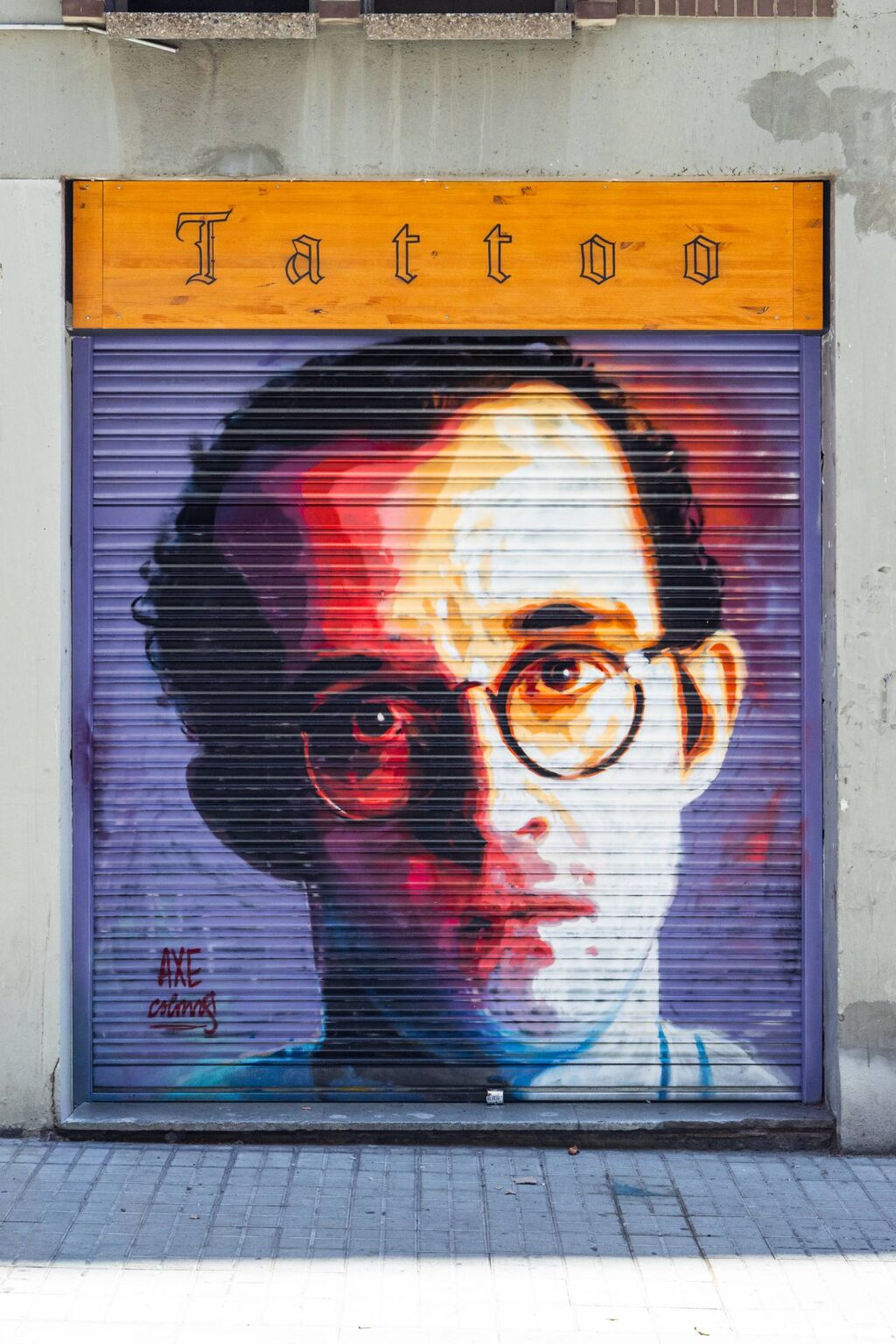
You’ve made shop shutters the core of your work. How do you work with a shop, and what’s special about painting on that surface?
I always try to make it easy, quick and convenient for everyone. I listen to the client and we agree on a design and a budget. We pick a day when the shutter will be down and I take care of the rest: I get there, give the shutter a bit of a clean, mask off the edges and draw a grid so I have precise reference points. I paint the whole shutter and we wrap up the deal with the client.
The main difference is the surface. Shutters are usually made of concave or convex metal slats, which makes it hard to apply the spray evenly, so they’re trickier to paint. On the other hand, the slats themselves give you a constant horizontal reference, which is really useful.
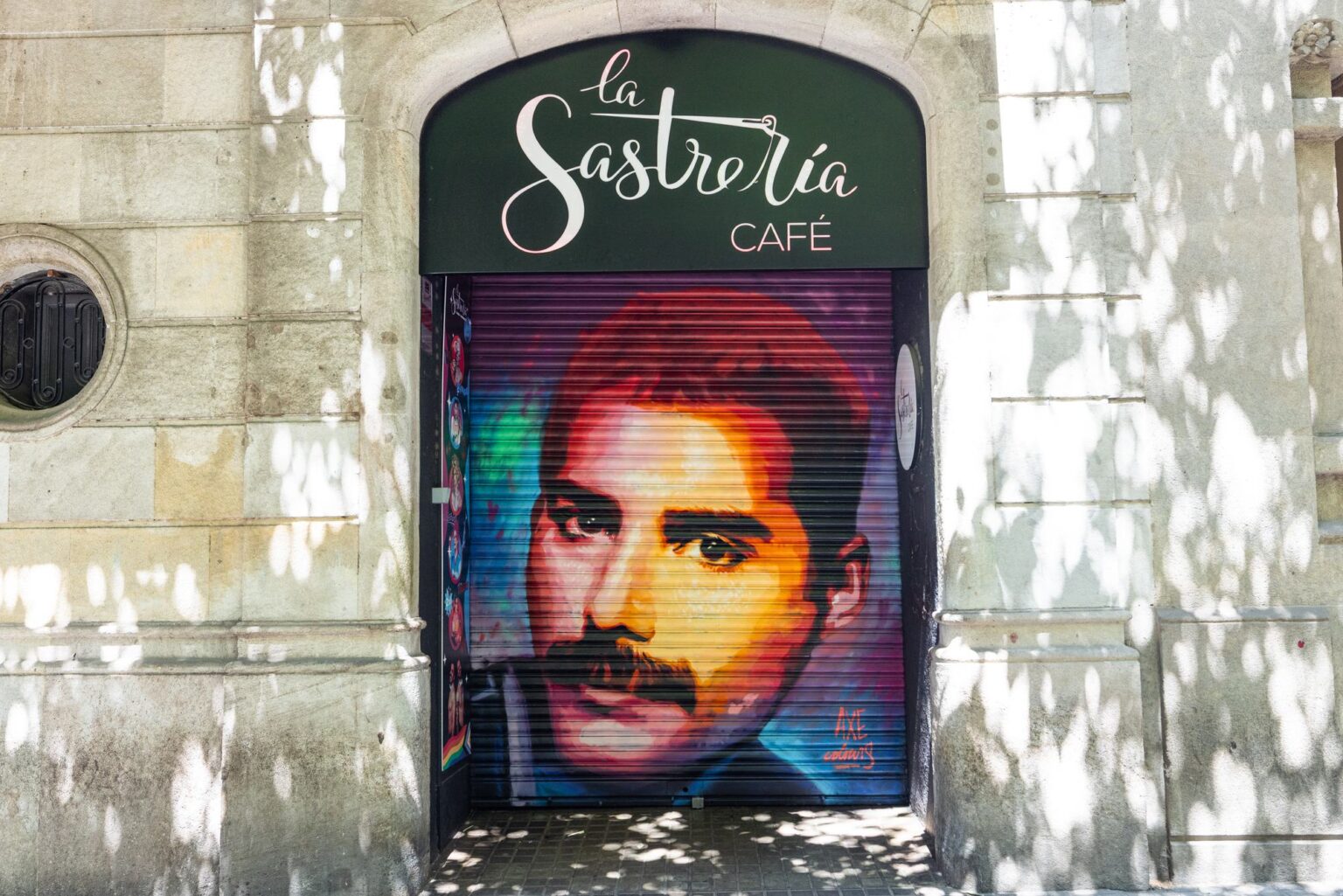
Let’s talk money. How do you price a large-format mural? What’s there beyond the square metres?
Some people charge by the hour. I prefer to quote for the full service. Mainly I weigh the complexity of the design (detail, colours, lettering…) against the total surface to paint. But you also have to consider who the client is, how much exposure or reach the mural will get, whether it’s at height and needs ladders or lifts, whether there’s travel or expenses, and also your own fee level, the one you’ve earned through years of experience. I try to focus on my net fee and add expenses separately, to judge whether it’s worth it or not.
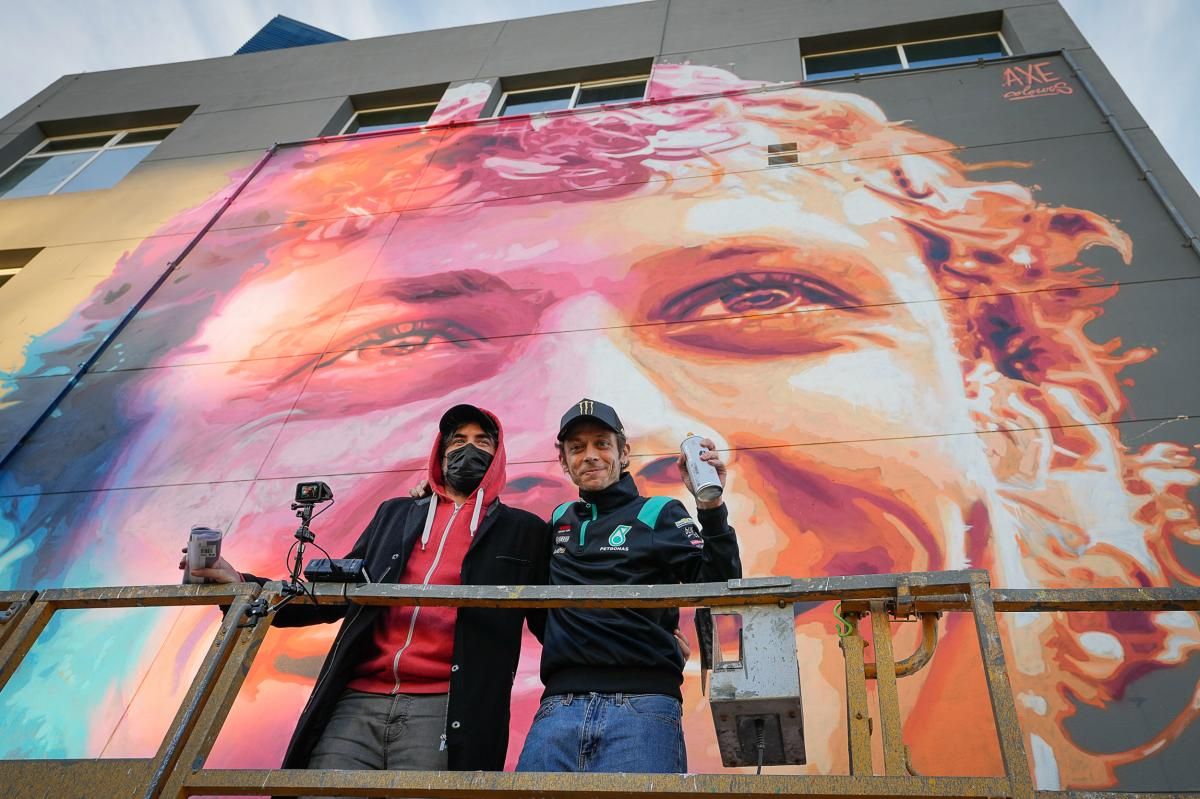
Can you make a living from murals in Barcelona without commercial commissions? And how do you see the way budgets are split at mural festivals?
Personally, shutters have been my base and I haven’t got into the mural festival circuit, but there are people who make a living from it. It’s also true that there’s more and more competition, and at a very high level. But if you want to, you can.
As for production budgets versus artists’ fees, I think it hurts all of us artists to see middlemen end up taking a good chunk for management.
If tomorrow you could paint whatever you wanted, with no client and no budget, on the best wall in Barcelona, what would you paint?
The easy answer would be a huge Messi. A lot of Argentinians ask me how come Barcelona isn’t full of Messi portraits everywhere, like in Argentina. I’ve tried, but they end up getting erased. So it would be a great chance to give him a proper tribute.
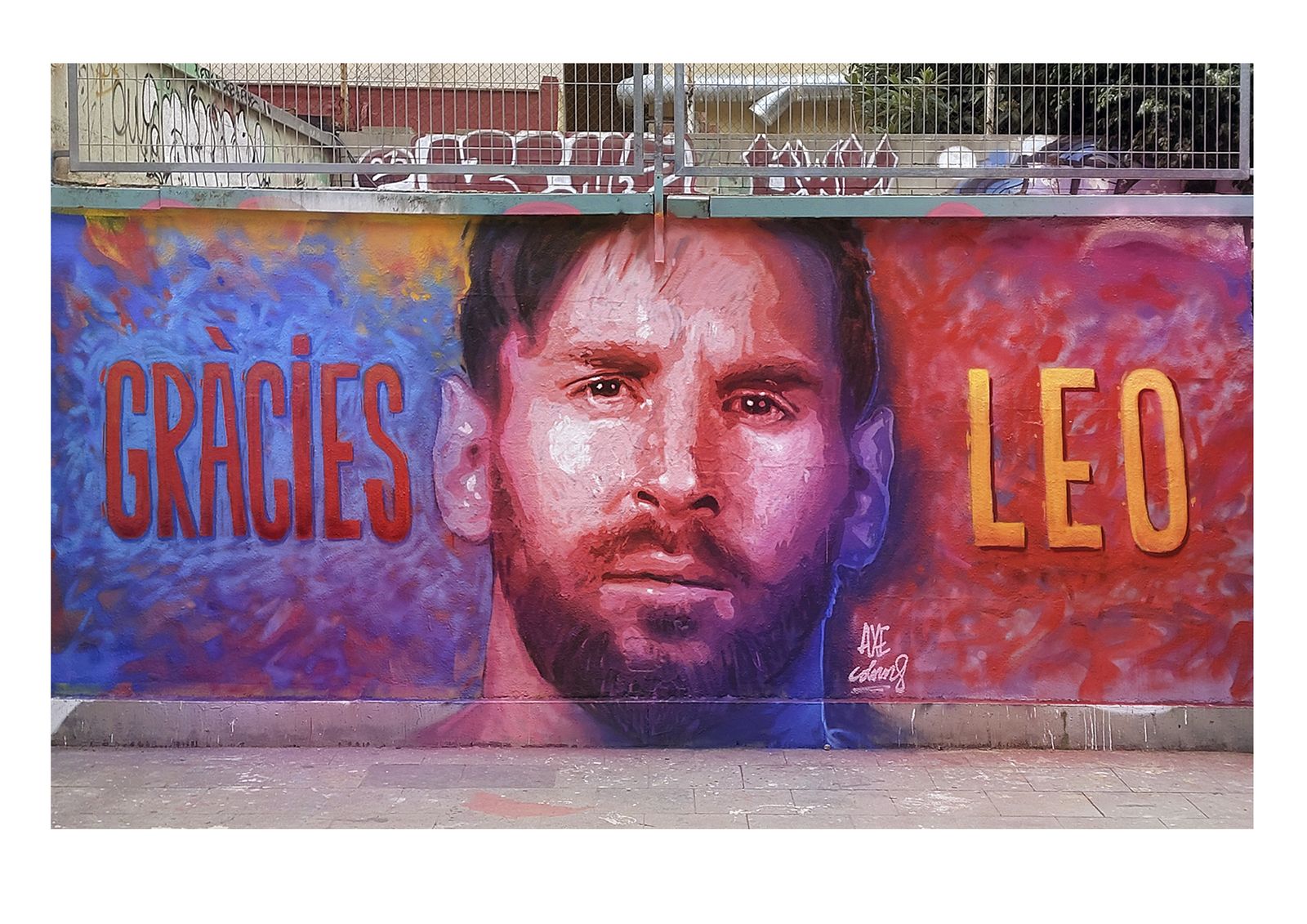
More of the artist’s work: axecolours.com and on Instagram, @axe_colours.
Featured projects with Rebobinart
Axe Colours’ shutters for Comerç Divers, part of Persianes que fan barri, the urban art project across 185 Barcelona shops with creative direction by Rebobinart.


